
Pollination services of managed common eastern bumble bees (Bombus impatiens) in seedless watermelon (Citrullus lanatus)
DOI:
https://doi.org/10.26786/1920-7603(2026)966Keywords:
colony hive, fluorescent powder, pollen analysis, pollinator-dependent crop, focal plant observations, quad nest-boxAbstract
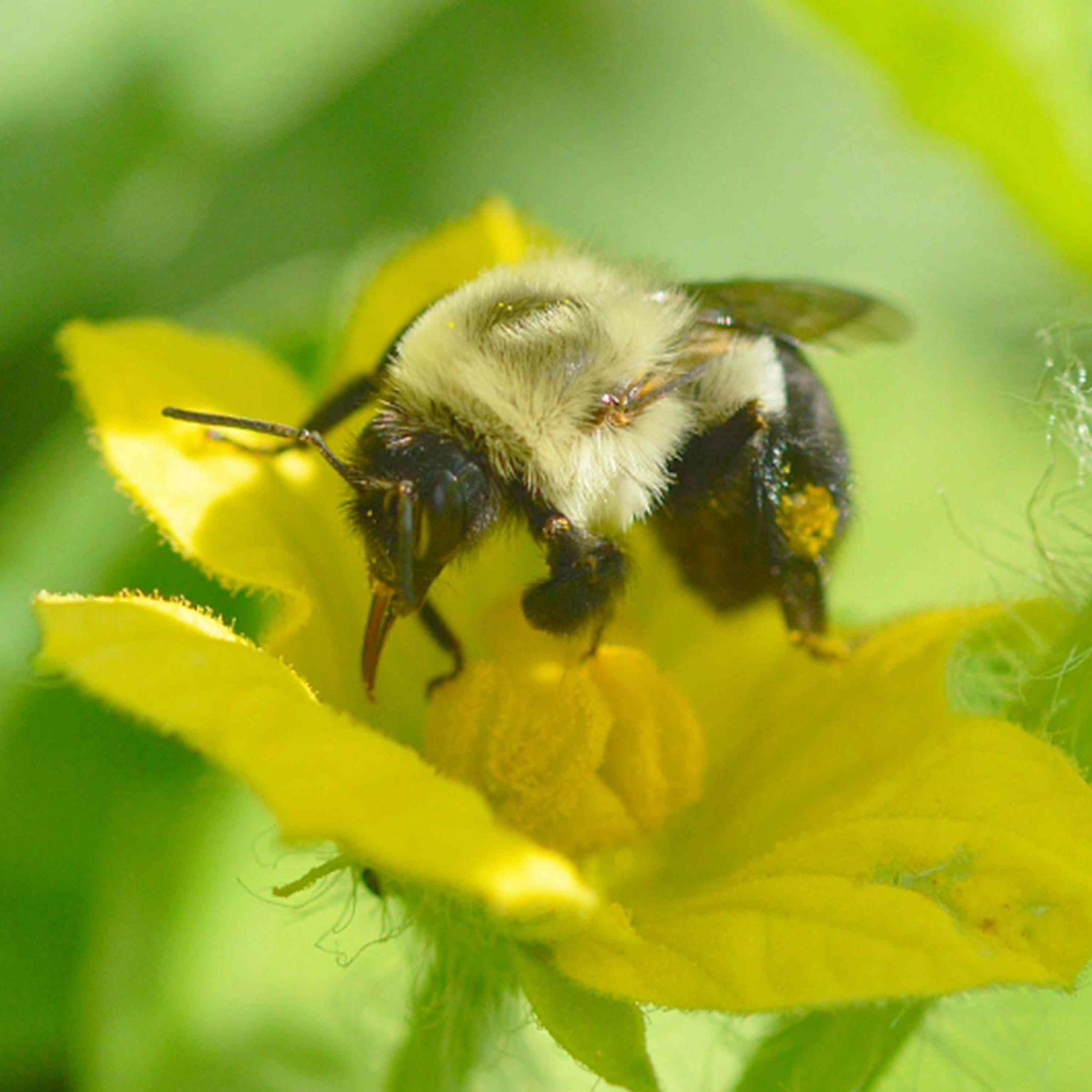
Seedless watermelon is a highly pollinator-dependent crop; in consequence, growers stock fields with managed pollinators to ensure high yields. Historically, only western honey bees (Apis mellifera) were used, but, more recently, growers have begun adding common eastern bumble bees (Bombus impatiens) as further insurance. While bumble bees are efficient watermelon pollinators on a per-visit basis, the impacts of field-scale colony supplementation are unknown. We conducted two field studies in 2017-2018 and 2025 across 36 commercial watermelon fields that were either stocked or unstocked with bumble bees. Focal flower observations were then used to investigate pollinator visitation frequency (individuals recorded per observation) and visitation rate (flowers visited per minute per individual) across and within (i.e., near vs. far from colonies) fields. Additionally, in 2025, we dusted bumble bee colonies with fluorescent powder to more directly quantify their flower visitation, and in 2024-225, we identified colony and foragers’ pollen loads to estimate watermelon’s relative contribution to foraging dynamics. Observations revealed that managed bumble bees did not increase visitation frequency to watermelon flowers at a whole field-scale, but only on plants adjacent to colonies within a field (3.6-fold increase within 10 m radius). Managed bumble bee presence also influenced other pollinators, with small solitary bees being, overall, most affected. Only 1.5% of flowers around bumble bee colonies contained fluorescent powder traces and 2.9% of pollen grains were identified as watermelon. Collectively, our data suggest that watermelon is not a preferred resource for managed bumble bees and thus stocking fields with colonies may not increase visits to crop flowers or contribute to enhancing yield.
References
Aizen MA, Aguiar S, Biesmeijer JC, Garibaldi LA, Inouye DW, Jung C, Martins DJ, Medel R, Morales CL, Ngo H, Pauw A, Paxton RJ, Sáez A, Seymour CL (2019) Global agricultural productivity is threatened by increasing pollinator dependence without a parallel increase in crop diversification. Global Change Biology 25:3516–3527.
Bain JA, Ogilvie JE, Petry WK, CaraDonna PJ (2025) Nutrient niche dynamics among wild pollinators. Proceedings of the Royal Society B: Biological Sciences 292
Barth OM, Freitas AS, Oliveira ÉS, Silva RA, Maester FM, Andrella RRS, Cardozo GMBQ (2010) Evaluation of the botanical origin of commercial dry bee pollen load batches using pollen analysis: a proposal for technical standardization. Anais da Academia Brasileira de Ciências 82:893–902.
Bartoń K (2025) MuMIn: multi-model inference. R package version 1.48.11.
Bates DM, Mäechler M, Bolker BM, Walker S (2015) Fitting linear mixed-effects models using lme4. Journal of Statistical Software 67:1–48.
Bie M, Song K, Dong H, Zhao W, Lin H, Shi D, Liu D (2025) Advancing sustainable agriculture through bumblebee pollination: bibliometric insights and future directions. Sustainability 17:2177. [online] URL: https://www.mdpi.com/2071-1050/17/5/2177
Bloom EH, Wood TJ, Hung KLJ, Ternest JJ, Ingwell LL, Goodell K, Kaplan I, Szendrei Z (2021) Synergism between local- and landscape-level pesticides reduces wild bee floral visitation in pollinator-dependent crops. Journal of Applied Ecology 58:1187–1198.
Bosch J, Kemp WP, Trostle GE (2006) Bee population returns and cherry yields in an orchard pollinated with Osmia lignaria (Hymenoptera: Megachilidae). Journal of Economic Entomology 99:408–413.
Boyle NK, Pitts-Singer TL (2019) Assessing blue orchard bee (Osmia lignaria) propagation and pollination services in the presence of honey bees (Apis mellifera) in Utah tart cherries. PeerJ 2019:e7639.
Brittain C, Kremen C, Klein AM (2013a) Biodiversity buffers pollination from changes in environmental conditions. Global Change Biology 19:540–547.
Brittain C, Williams N, Kremen C, Klein AM (2013b) Synergistic effects of non-Apis bees and honey bees for pollination services. Proceedings of the Royal Society B: Biological Sciences 280:1–7.
Brochu KK, van Dyke MT, Milano NJ, Petersen JD, McArt SH, Nault BA, Kessler A, Danforth BN (2020) Pollen defenses negatively impact foraging and fitness in a generalist bee (Bombus impatiens: Apidae). Scientific Reports 10:3112.
Brunet J, Fragoso FP (2024) What are the main reasons for the worldwide decline in pollinator populations? CABI Reviews 19:1–11. [online] URL: http://www.cabidigitallibrary.org/doi/10.1079/cabireviews.2024.0016
Campbell JW, Bammer M, Bustamante TA, Ellis JD (2019a) The health of commercial Bombus impatiens (Hymenoptera: Apidae) colonies after foraging in Florida watermelon and blueberry. Environmental Entomology 48:1197–1202.
Campbell JW, Daniels JC, Ellis JD (2018) Fruit set and single visit stigma pollen deposition by managed bumble bees and wild bees in Citrullus lanatus (Cucurbitales: Cucurbitaceae). Journal of Economic Entomology 111:989–992.
Campbell JW, Stanley-Stahr C, Bammer M, Daniels JC, Ellis JD (2019b) Contribution of bees and other pollinators to watermelon (Citrullus lanatus Thunb.) pollination. Journal of Apicultural Research 58:597–603.
Eeraerts M, Smagghe G, Meeus I (2020) Bumble bee abundance and richness improves honey bee pollination behaviour in sweet cherry. Basic and Applied Ecology 43:27–33.
Foulis ESJ, Goulson D (2014) Commercial bumble bees on soft fruit farms collect pollen mainly from wildflowers rather than the target crops. Journal of Apicultural Research 53:404–407.
Gaffney A, Bohman B, Quarrell SR, Brown PH, Allen GR (2019) Limited cross plant movement and non-crop preferences reduce the efficiency of honey bees as pollinators of hybrid carrot seed crops. Insects 10:34.
Garantonakis N, Varikou K, Birouraki A, Edwards M, Kalliakaki V, Andrinopoulos F (2016) Comparing the pollination services of honey bees and wild bees in a watermelon field. Scientia Horticulturae 204:138–144.
Gauger L, Pulliam KF, Cherian Y, Garcia M, Morrison B, Gonthier D (2025) Bumble bee colony health is diminished in a mesotunnel enclosure planted with a cucurbit monoculture crop. Journal of Pollination Ecology 39:289–305.
Geldmann J, González-Varo JP (2018) Conserving honey bees does not help wildlife. Science 359:392–393.
Geslin B, Morales CL (2015) New records reveal rapid geographic expansion of Bombus terrestris Linnaeus, 1758 (Hymenoptera: Apidae), an invasive species in Argentina. Check List 11:1620.
Graham KK, Eaton K, Obrien I, Starks PT (2019) Anthidium manicatum, an invasive bee, excludes a native bumble bee, Bombus impatiens, from floral resources. Biological Invasions 21:1089–1099.
Hagler J, Mueller S, Teuber LR, Deynze A Van, Martin J (2011) A method for distinctly marking honey bees, Apis mellifera, originating from multiple apiary locations. Journal of Insect Science 11:1–14.
Hemberger J, Williams N (2025) Predicting landscape‐scale native bumble bee habitat use over space, time, and forage availability. Ecology 106:1–13.
Henne CS, Rodriguez E, Adamczyk JJ (2012) A survey of bee species found pollinating watermelons in the Lower Rio Grande Valley of Texas. Psyche: A Journal of Entomology 2012:1–5.
Iwasaki JM, Hogendoorn K (2022) Mounting evidence that managed and introduced bees have negative impacts on wild bees: an updated review. Current Research in Insect Science 2:100043.
Karbassioon A, Yearlsey J, Dirilgen T, Hodge S, Stout JC, Stanley DA (2023) Responses in honeybee and bumblebee activity to changes in weather conditions. Oecologia 201:689–701.
Katumo DM, Liang H, Ochola AC, Lv M, Wang Q-F, Yang C-F (2022) Pollinator diversity benefits natural and agricultural ecosystems, environmental health, and human welfare. Plant Diversity 44:429–435.
Kearns CA, Inouye DW (1993) Techniques for pollination biologists. University Press of Colorado. Niwor, USA.
Klein A-M, Vaissière BE, Cane JH, Steffan-Dewenter I, Cunningham SA, Kremen C, Tscharntke T (2007) Importance of pollinators in changing landscapes for world crops. Proceedings of the Royal Society B: Biological Sciences 274:303–313.
Kosmidis I (2025) brglm2: bias reduction in generalized linear models. R package version 1.0.1.
Larsson M (2005) Higher pollinator effectiveness by specialist than generalist flower-visitors of unspecialized Knautia arvensis (Dipsacaceae). Oecologia 146:394–403.
Layek U, Kundu A, Bisui S, Karmakar P (2021) Impact of managed stingless bee and western honey bee colonies on native pollinators and yield of watermelon: a comparative study. Annals of Agricultural Sciences 66:38–45.
Leach A, Kaplan I (2022) Prioritizing pollinators over pests: wild bees are more important than beetle damage for watermelon yield. Proceedings of the Royal Society B: Biological Sciences 289:20221279.
Leach A, Kaplan I (2024) Cucumber beetles negatively impact pollinator visitation to cucurbit flowers. Ecological Entomology:1–5.
Lenth R V. (2025) emmeans: estimated marginal means, aka least-squares means. R package version 1.11.2-8.
Lichtenberg EM, Richman SK, Irwin RE, Bronstein JL (2020) Competition for nectar resources does not affect bee foraging tactic constancy. Ecological Entomology 45:904–909.
Liczner AR, Colla SR, Fitch G (2025) Assessing pathogen risk for wild bumblebees (Bombus spp., Apidae) in Canada. Conservation Science and Practice 7:1–15.
Lyu Z, Zhou T, Sun M, Feng M, Guo W, Nie L, Song Y, Men X, Li L, Yu Y (2023) Exploratory comparison of flower visiting behavior and pollination ability of mason bees, bumble bees, and honey bees Nino E (ed). Journal of Economic Entomology 116:1949–1956. [online] URL:
Mallinger R, Ternest JJ, Naranjo SM (2021) Blueberry yields increase with bee visitation rates, but bee visitation rates are not consistently predicted by colony stocking densities. Journal of Economic Entomology 114:1441–1451.
Mallinger RE, Gaines-Day HR, Gratton C (2017) Do managed bees have negative effects on wild bees?: a systematic review of the literature. PLoS ONE 12:e0189268.
Marchese J, Delaney D, Johnson G (2013) Best management practices for using commercial bumble bees on horticultural crops in Delaware. University of Delaware Cooperative Extension. [online] URL: https://sites.udel.edu/weeklycropupdate/?p=5408
Marchese JI, Johnson GJ, Delaney DA (2015) Exposure effects on the productivity of commercial Bombus impatiens (Hymenoptera: Apidae) quads during bloom in watermelon fields. Journal of Economic Entomology 108:1810–1817.
Mateos-Fierro Z, Garratt MPD, Fountain MT, Ashbrook K, Westbury DB (2022) Wild bees are less abundant but show better pollination behaviour for sweet cherry than managed pollinators. Journal of Applied Entomology 146:361–371.
Mateos-Fierro Z, Garratt MPD, Fountain MT, Ashbrook K, Westbury DB (2023) The potential of wildflower strips to enhance pollination services in sweet cherry orchards grown under polytunnels. Journal of Applied Ecology 60:1044–1055.
Mateos-Fierro Z, Leach A, Kaplan I (2026) Intercropped rye strips constrain the within-field foraging behavior of wild and managed bees on watermelon flowers. Arthropod-Plant Interactions 20:27.
Mola JM, Williams NM (2025) Bumble bee movement ecology: foraging and dispersal across castes and life stages. Annals of the Entomological Society of America 118:175–188.
Newhouse AE, Allwine AE, Oakes AD, Matthews DF, McArt SH, Powell WA (2021) Bumble bee (Bombus impatiens) survival, pollen usage, and reproduction are not affected by oxalate oxidase at realistic concentrations in American chestnut (Castanea dentata) pollen. Transgenic Research 30:751–764.
O’Rourke MK, Buchmann SL (1991) Standardized analytical techniques for bee-collected pollen. Environmental Entomology 20:507–513.
Ollerton J, Winfree R, Tarrant S (2011) How many flowering plants are pollinated by animals? Oikos 120:321–326.
Osterman J, Aizen MA, Biesmeijer JC, Bosch J, Howlett BG, Inouye DW, Jung C, Martins DJ, Medel R, Pauw A, Seymour CL, Paxton RJ (2021) Global trends in the number and diversity of managed pollinator species. Agriculture, Ecosystems and Environment 322:107653.
Osterman J, Benton F, Hellström S, Luderer-Pflimpfl M, Pöpel-Eisenbrandt AK, Wild BS, Theodorou P, Ulbricht C, Paxton RJ (2023) Mason bees and honey bees synergistically enhance fruit set in sweet cherry orchards. Ecology and Evolution 13:e10289.
Page ML, Williams NM (2023) Honey bee introductions displace native bees and decrease pollination of a native wildflower. Ecology 104:1–12.
Pecenka JR, Ingwell LL, Krupke CH, Kaplan I (2023) Implementing IPM in crop management simultaneously improves the health of managed bees and enhances the diversity of wild pollinator communities. Scientific Reports 13:11033.
Petersen JD, Reiners S, Nault BA (2013) Pollination services provided by bees in pumpkin fields supplemented with either Apis mellifera or Bombus impatiens or not supplemented. PLoS ONE 8:e69819.
Phillips B (Ed) (2024) 2025 Midwest vegetable production guide. [online] URL: https://mwveguide.org/index.php?p=guide
Pitts-Singer TL, Cane JH (2011) The alfalfa leafcutting bee, Megachile rotundata: the world’s most intensively managed solitary bee. Annual Review of Entomology 56:221–237.
Porto RG, de Almeida RF, Cruz-Neto O, Tabarelli M, Viana BF, Peres CA, Lopes AV (2020) Pollination ecosystem services: a comprehensive review of economic values, research funding and policy actions. Food Security 12:1425–1442.
Quinn GP, Keough MJ (2002) Experimental design and data analysis for biologists. Cambridge University Press.
R Core Team (2026) R: a language and environment for statistical computing. R Foundation for Statistical Computing, Vienna, Austria. [online] URL: http://www.r-project.org
Rader R, Bartomeus I, Garibaldi LA, Garratt MPD, Howlett BG, Winfree R, Cunningham SA, Mayfield MM, Arthur AD, Andersson GKS, Bommarco R, Brittain C, Carvalheiro LG, Chacoff NP, Entling MH, Foully B, Freitas BM, Gemmill-Herren B, Ghazoul J, Griffin SR, Gross CL, Herbertsson L, Herzog F, Hipólito J, Jaggar S, Jauker F, Klein A-M, Kleijn D, Krishnan S, Lemos CQ, Lindström SAM, Mandelik Y, Monteiro VM, Nelson W, Nilsson L, Pattemore DE, de O. Pereira N, Pisanty G, Potts SG, Reemer M, Rundlöf M, Sheffield CS, Scheper J, Schüepp C, Smith HG, Stanley DA, Stout JC, Szentgyörgyi H, Taki H, Vergara CH, Viana BF, Woyciechowski M (2016) Non-bee insects are important contributors to global crop pollination. Proceedings of the National Academy of Sciences 113:146–151.
Senapathi D, Biesmeijer JC, Breeze TD, Kleijn D, Potts SG, Carvalheiro LG (2015) Pollinator conservation - The difference between managing for pollination services and preserving pollinator diversity. Current Opinion in Insect Science 12:93–101.
Shivanna KR, Tandon R (2014) Reproductive ecology of flowering plants: a manual. Springer India, New Delhi.
Silva Macêdo N, de Sousa Silveira Z, Dantas DM, Rodrigues dos Santos Barbosa C, Lucas dos Santos AT, Araújo de Medeiros Brito T, Tavares JF, Duarte Leite DO, Freitas Alexandre PR, Martins da Costa JG, Datiane de Morais Oliveira-Tintino C, Melo Coutinho HD, Bezerra Morais-Braga MF, Bezerra da Cunha FA (2025) Chemical characterization, antibacterial and antifungal activity of honey pots and pollen pots obtained from the stingless bee Tetragonisca angustula (Latreille, 1811). Food and Chemical Toxicology 197:115305.
Siopa C, Carvalheiro LG, Castro H, Loureiro J, Castro S (2024) Animal‐pollinated crops and cultivars—A quantitative assessment of pollinator dependence values and evaluation of methodological approaches. Journal of Applied Ecology 61:1279–1288.
Smith BJ, Sampson BJ, Walter M (2012) Efficacy of bumble bee disseminated biological control agents for control of botrytis blossom blight of rabbiteye blueberry. International Journal of Fruit Science 12:156–168.
Smith MR, Mueller ND, Springmann M, Sulser TB, Garibaldi LA, Gerber J, Wiebe K, Myers SS (2022) Pollinator deficits, food consumption, and consequences for human health: a modeling study. Environmental Health Perspectives 130:485–493. [online] URL: https://pubs.acs.org/page/evhpaz/EHP-legacy-content
Soininen J, Paukkunen J, Kytöviita M-M (2025) Managed honeybees affect the foraging behaviour of bumblebees in Geranium sylvaticum. Journal of Pollination Ecology 39:316–329.
Stanghellini MS, Ambrose JT, Schultheis JR (1998) Using commercial bumble bee colonies as backup pollinators for honey bees to produce cucumbers and watermelons. HortTechnology 8:590–594.
Stanghellini MS, Ambrose JT, Schultheis JR (2002) Diurnal activity, floral visitation and pollen deposition by honey bees and bumble bees on field-grown cucumber and watermelon. Journal of Apicultural Research 41:27–34.
Strange JP (2015) Bombus huntii, Bombus impatiens, and Bombus vosnesenskii (Hymenoptera: Apidae) pollinate greenhouse-grown tomatoes in western North America. Journal of Economic Entomology 108:873–879.
Stroh E, Leach A, Mateos-Fierro Z, Kaplan I (2024) Distinct pollinator communities persist among co-flowering specialty crops in Indiana. Journal of Pollination Ecology 36:269–283.
Stroh E, Leach A, Mateos-Fierro Z, Kaplan I (2025) Evidence of widespread pollen limitation in diverse specialty crops on commercial farms. Royal Society Open Science 12:250201.
Subasinghe Arachchige ECW, Evans LJ, Campbell JW, Delaplane KS, Rice ES, Cutting BT, Kendall LK, Samnegård U, Rader R (2023) A global assessment of the species composition and effectiveness of watermelon pollinators and the management strategies to inform effective pollination service delivery. Basic and Applied Ecology 66:50–62.
Subasinghe Arachchige ECW, Evans LJ, Samnegård U, Rader R (2022a) Morphological characteristics of pollen from triploid watermelon and its fate on stigmas in a hybrid crop production system. Scientific Reports 12:3222.
Subasinghe Arachchige ECW, Rader R, Cutting BT, Keir M, van Noort T, Fale G, Howlett BG, Samnegård U, Evans LJ (2022b) Honey bees are the most abundant visitors to Australian watermelon but native stingless bees are equally effective as pollinators. Ecological Solutions and Evidence 3:e12189.
Ternest JJ, Muñoz PR, Mallinger RE (2026) Do buzz‐pollinating bumble bees facilitate honey bee pollination in southern highbush blueberry through increasing pollen release? Ecology and Evolution 16:1–9.
Toni HC, Djossa BA, Ayenan MAT, Teka O (2021) Tomato (Solanum lycopersicum) pollinators and their effect on fruit set and quality. The Journal of Horticultural Science and Biotechnology 96:1–13.
Trillo A, Herrera JM, Vilà M (2018) Managed bumble bees increase flower visitation but not fruit weight in polytunnel strawberry crops. Basic and Applied Ecology 30:32–40.
Vaudo AD, Patch HM, Mortensen DA, Tooker JF, Grozinger CM (2016) Macronutrient ratios in pollen shape bumble bee (Bombus impatiens) foraging strategies and floral preferences. Proceedings of the National Academy of Sciences 113:E4035–E4042.
Vaudo AD, Tooker JF, Patch HM, Biddinger DJ, Coccia M, Crone MK, Fiely M, Francis JS, Hines HM, Hodges M, Jackson SW, Michez D, Mu J, Russo L, Safari M, Treanore ED, Vanderplanck M, Yip E, Leonard AS, Grozinger CM (2020) Pollen protein: lipid macronutrient ratios may guide broad patterns of bee species floral preferences. Insects 11:132.
Whittington R, Winston ML, Tucker C, Parachnowitsch AL (2004) Plant-species identity of pollen collected by bumblebees placed in greenhouses for tomato pollination. Canadian Journal of Plant Science 84:599–602.
Wickham H (2016) ggplot2. Elegant graphics for data analysis, Second Edi. Springer New York, New York, NY.
Wijesinghe SAEC, Evans LJ, Kirkland L, Rader R (2020) A global review of watermelon pollination biology and ecology: the increasing importance of seedless cultivars. Scientia Horticulturae 271:109493.
Wolf S, Moritz RFA (2008) Foraging distance in Bombus terrestris L. (Hymenoptera: Apidae). Apidologie 39:419–427.
Xu S, Chen M, Feng T, Zhan L, Zhou L, Yu G (2021) Use ggbreak to effectively utilize plotting space to deal with large datasets and outliers. Frontiers in Genetics 12:774846.
Yourstone J, Varadarajan V, Olsson O (2023) Bumblebee flower constancy and pollen diversity over time. Behavioral Ecology 34:602–612.
Zhou Z, Zhang H, Mashilingi SK, Jie C, Guo B, Guo Y, Hu X, Iqbal S, Wei B, Liu Y, An J (2024) Bombus terrestris prefer mixed-pollen diets for a better colony performance: a laboratory study. Insects 15:285.
Downloads
Published
How to Cite
Issue
Section
License
Copyright (c) 2026 Zeus Mateos Fierro, Ashley Leach, Doriana Mierow, John Ternest, Ian Kaplan

This work is licensed under a Creative Commons Attribution 4.0 International License.