Pollen source gathered by managed honey bees and unmanaged wild bees: implications for wild bees’ conservation in the insular ecosystems of the Tuscan Archipelago National Park.
DOI:
https://doi.org/10.26786/1920-7603(2026)969Keywords:
Apis mellifera, Apoidea, palynological analysis, protected area, trophic competitionAbstract
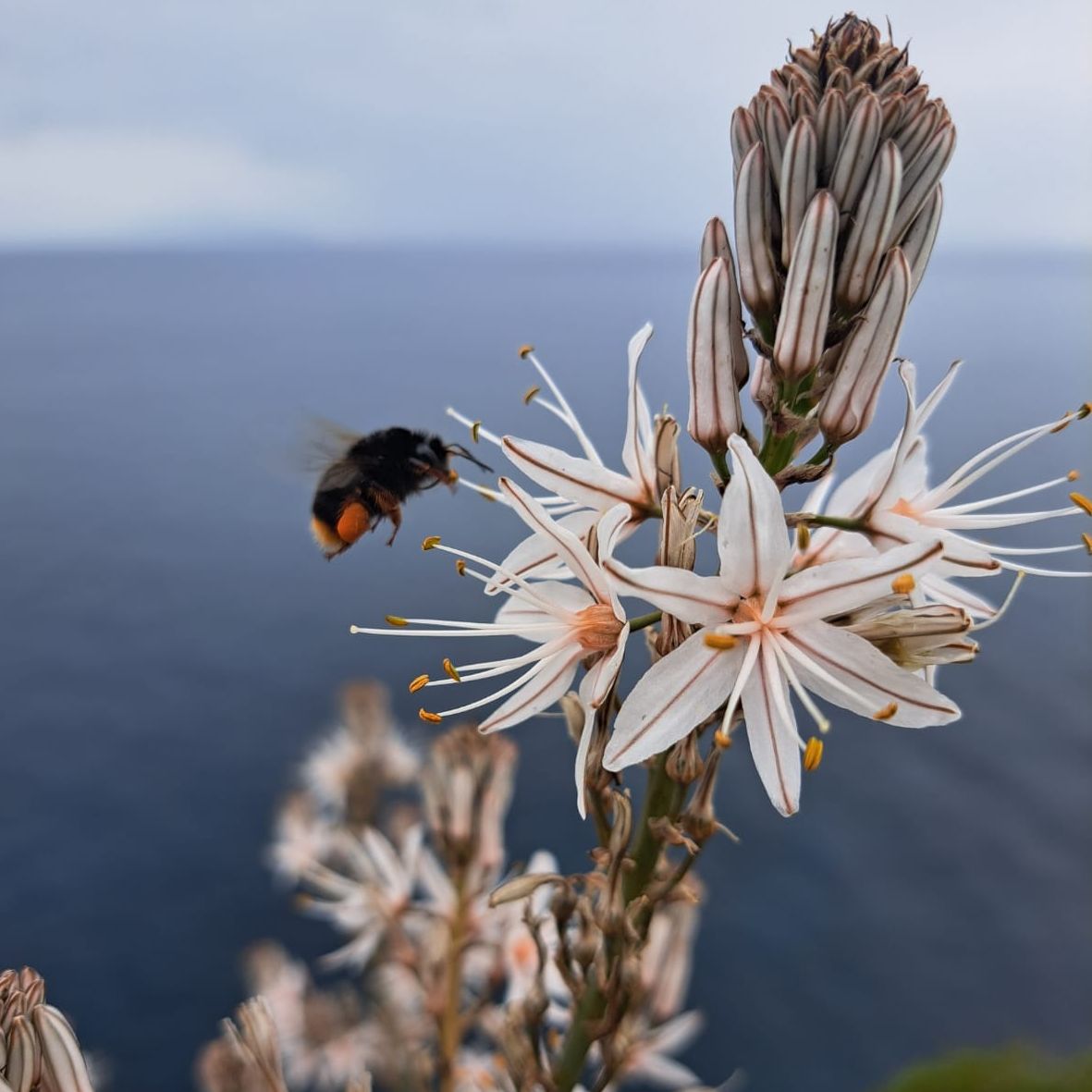
Insect pollination supports biodiversity in natural and agricultural systems. However, increasing beekeeping activity raises concerns about the impacts of managed Apis mellifera on wild bees, already threatened by land-use change, agricultural intensification, pesticides, climate change, and invasive species. Understanding interspecific interactions is therefore essential to inform wild bee conservation and management strategies. This study investigated pollen resource use and trophic niche overlap between managed honey bees and wild bee communities on Capraia, Elba, and Giglio islands, within the Tuscan Archipelago National Park, through morphological and molecular pollen analyses. Pollen-use overlap with managed honey bees was recorded in 58.7% of the interactions with wild bee species, with an overall medium–low niche overlap (α ≤ 0.59), while only 16.7% of interactions showed high overlap. Significant differences in pollen composition were detected between honey bees and the genera Andrena, Bombus, Ceratina, Colletes, Heriades, Megachile and Seladonia. These patterns may suggest limited trophic competition between honey bees and wild bees, but low niche overlap does not necessarily imply its absence. The negative relationship observed between honey bee density and pollen overlap suggests that wild bees may increasingly rely on alternative pollen sources under higher honey bee densities, indicating trophic repartition as a potential response to competitive pressure. Since National Parks play a key role in conserving pollinators, precautionary approaches towards a low-intensity beekeeping management and further research on the mechanisms underlying these interactions that may potentially threat the survival of wild bee communities are essential for their conservation.
References
Abou-Shaara, HF (2025) Competition for resources: What factors lead honey bees to outcompete other insect competitors? Acta Oecologica 127: 104077. DOI: https://doi.org/10.1016/j.actao.2025.104077
Bascompte J, Jordano P. (2007). Plant-animal mutualistic networks: the architecture of biodiversity. Annual Review of Ecology, Evolution, and Systematics 38 (1):567-593. DOI: https://doi.org/10.1146/annurev.ecolsys.38.091206.095818
Blüthgen N, Menzel F, Blüthgen, N. (2006) Measuring specialization in species interaction networks. BMC Ecology 6 (1):1-12. DOI: https://doi.org/10.1186/1472-6785-6-9
Boni CB, Coppola F, Sagona S, Quaranta M, Flaminio S, Biella P, Tempesti S, Lazzeri AM, Di Santo M, Felicioli A. (2025) Pollen Resource Repartition Between Managed Honey Bees (Apis mellifera L. 1758) and Unmanaged Bees in Three Italian National Parks. Conservation 5(1):5. DOI: https://doi.org/10.3390/conservation5010005
Brodschneider R, Crailsheim K (2010) Nutrition and health in honey bees. Apidologie 41:278–294. DOI: https://doi.org/10.1051/apido/2010012
Cappellari A, Bonaldi G, Mei M, Paniccia D, Cerretti P, Marini L (2022) Functional traits of plants and pollinators explain resource overlap between honeybees and wild pollinators. Oecologia 198:1019–1029. DOI: https://doi.org/10.1007/s00442-022-05151-6
Casanelles‐Abella J, Fontana S, Fournier B, Frey D, Moretti M (2023) Low resource availability drives feeding niche partitioning between wild bees and honeybees in a European city. Ecological Applications 33(1): e2727. DOI: https://doi.org/10.1002/eap.2727
Chowdhury S, Jennions MD, Zalucki MP, Maron M, Watson JE, Fuller RA (2022) Protected areas and the future of insect conservation. Trends in Ecology and Evolution 38:85–95. DOI: https://doi.org/10.1016/j.tree.2022.09.004
Dormann CF, Fründ J, Blüthgen N, Gruber B (2009) Indices, graphs and null models: analyzing bipartite ecological networks. The Open Ecology Journal 2:7-24. 10.2174/1874213000902010007 DOI: https://doi.org/10.2174/1874213000902010007
Fischer MM (2019) Quantifying the uncertainty of variance partitioning estimates of ecological datasets. Environmental and Ecological Statis-tics 26(4):351-366. DOI: https://doi.org/10.1007/s10651-019-00431-6
Foggi B, Cartei L, Pignotti L, Signorini MA, Viciani D (2006) Il paesaggio vegetale dell’Isola d’Elba (Arcipelago toscano): studio fitosociologico e cartografico. Fitosociologia 43(1):3-94.
Folmer O, Black M, Hoeh W, Lutz R, Vrijenhoek R (1994) DNA primers for amplification of mitochondrial cytochrome c oxidase subunit I from diverse metazoan invertebrates. Molecular Marine Biology and Biotechnology 3(5):294–299.
Franco EL, Aguiar M, Ferreira VS, de Oliveira-Reboucas PL (2009) Plant use and niche overlap between the introduced honey bee (Apis mellifera) and the native bumblebee (Bombus atratus) (Hymenoptera: Apidae) in an area of tropical mountain vegetation in northeastern Brazil. Sociobiology 53:141–150.
Geslin B, Gauzens B, Baude M, Dajoz I, Fontaine C, Henry M, Ropars L, Rollin O, Thebault E, Vereecken NJ. (2017). Massively introduced managed species and their consequences for plant–pollinator interactions. In: Bohan DA, Dumbrell AJ, Massol F (Eds), Advances in ecological research. Academic Press, 57:147-199, DOI: https://doi.org/10.1016/bs.aecr.2016.10.007
Gill RJ, Baldock KC, Brown MJ, Cresswell JE, Dicks LV, Fountain MT, Garratt MPD, Gough LA, Heard MS, Holland JM, Ollerton J, Stone GN, Tang CQ, Vanbergen AJ, Vogler AP, Woodward G, Arce AN, Boatman ND, Brand-Hardy R, Breeze TD, Green M, Hartfield CM, O’Connor RS, Osborne JL, Phillips J, Sutton PB, Potts SG (2016) Protecting an ecosystem service: approaches to understanding and mitigating threats to wild insect pollinators. Advances in Ecological Research 54:135-206. DOI: https://doi.org/10.1016/bs.aecr.2015.10.007
Goulson D, Sparrow KR (2009) Evidence for competition between honeybees and bumblebees; effects on bumblebee worker size. Journal of insect conservation 13(2):177-181. DOI: https://doi.org/10.1007/s10841-008-9140-y
Hebert PD, Cywinska A, Ball SL, DeWaard JR (2003) Biological identifications through DNA barcodes. Proceedings of the Royal Society of London. Series B: Biological Sciences 270(1512):313–321. DOI: https://doi.org/10.1098/rspb.2002.2218
Henry M, Rodet G (2018) Controlling the impact of the managed honeybee on wild bees in protected areas. Scientific Reports 8(1):9308. DOI: https://doi.org/10.1038/s41598-018-27591-y
Henry M, Rodet G (2020) The apiary influence range: A new paradigm for managing the cohabitation of honey bees and wild bee communities. Acta Oecologica 105: 103555. DOI: https://doi.org/10.1016/j.actao.2020.103555
Herrera CM (2020) Gradual replacement of wild bees by honeybees in flowers of the Mediterranean Basin over the last 50 years. Proceedings of the Royal Society B: Biological Sciences 287(1921):20192657. DOI: https://doi.org/10.1098/rspb.2019.2657
Hristov P, Neov B, Shumkova R, Palova N (2020) Significance of Apoidea as main pollinators. ecological and economic impact and implications for human nutrition. Diversity 12(7):280. DOI: https://doi.org/10.3390/d12070280
Hudewenz A, Klein AM (2015) Red mason bees cannot compete with honey bees for floral resources in a cage experiment. Ecology and Evolution 5(21):5049-5056. DOI: https://doi.org/10.1002/ece3.1762
Hung KLJ, Kingston JM, Albrecht M, Holway DA, Kohn JR (2018) The worldwide importance of honey bees as pollinators in natural habitats. Proceedings of the Royal Society B: Biological Sciences 285 (1870):20172140. DOI: https://doi.org/10.1098/rspb.2017.2140
Huryn VMB (1997) Ecological impacts of introduced honey bees. The Quarterly Review of Biology 72(3):275-297. DOI: https://doi.org/10.1086/419860
Italian Republic (1991). Law No. 394 of 6 December 1991. Framework Law on Protected Areas (Legge quadro sulle aree protette). Gazzetta Ufficiale della Repubblica Italiana, No. 292, 13 December 1991, Supplemento Ordinario No. 83.
Iwasaki JM, Hogendoorn K (2021) How protection of honey bees can help and hinder bee conservation. Current Opinion in Insect Science 46:112-118. DOI: https://doi.org/10.1016/j.cois.2021.05.005
Jean RP (2005). Quantifying a rare event: pollen theft by honey bees from bumble bees and other bees (Apoidea: Apidae, Megachilidae) foraging at flowers. Journal of the Kansas Entomological Society, 78(2), 172-175. DOI: https://doi.org/10.2317/0406.15.1
Jeavons E, van Baaren J, Le Lann C (2020) Resource partitioning among a pollinator guild: A case study of monospecific flower crops under high honeybee pressure. Acta Oecologica 104:103527. DOI: https://doi.org/10.1016/j.actao.2020.103527
Kaiser-Bunbury CN, Traveset A, Hansen DM (2010) Conservation and restoration of plant–animal mutualisms on oceanic islands. Perspectives in Plant Ecology, Evolution and Systematics 12(2):131-143. DOI: https://doi.org/10.1016/j.ppees.2009.10.002
Khalifa SA, Elshafiey EH, Shetaia AA, El-Wahed AAA, Algethami AF, Musharraf SG, El-Seedi HR (2021) Overview of bee pollination and its economic value for crop production. Insects 12(8):688. DOI: https://doi.org/10.3390/insects12080688
Lázaro A, Müller A, Ebmer AW, Dathe HH, Scheuchl E, Schwarz M, Risch S, Pauly A, Devalez J, Tscheulin T, Gómez-Martínez C, Papas E, Pickering J, M Waser N, Petanidou T (2021) Impacts of beekeeping on wild bee diversity and pollination networks in the Aegean Archipelago. Ecography 44(9): 1353-1365. DOI: https://doi.org/10.1111/ecog.05553
Lindström SA, Herbertsson L, Rundlöf M, Bommarco R, Smith HG (2016) Experimental evidence that honeybees depress wild insect densities in a flowering crop. Proceedings of the Royal Society B: Biological Sciences 283(1843). DOI: https://doi.org/10.1098/rspb.2016.1641
Louveaux J, Maurizio A, Vorwohl G (1978) Methods of melissopalynology. Bee World 59:139-157. DOI: https://doi.org/10.1080/0005772X.1978.11097714
Lunt D (2017) HotSHOT DNA extraction. Protocols.io. https://dx.doi.org/10.17504/protocols.io.g6vbze6 DOI: https://doi.org/10.17504/protocols.io.g6vbze6
Magrach A, Tobajas E, Martin PA (2025) Negative ecological impacts of honeybees begin at densities below recommended levels for crop pollination. Journal of Applied Ecology 62(9):2089-2095. DOI: https://doi.org/10.1111/1365-2664.70103
Mallinger RE, Gaines-Day HR, Gratton C (2017) Do managed bees have negative effects on wild bees?: A systematic review of the literature. PloS One 12(12): e0189268. DOI: https://doi.org/10.1371/journal.pone.0189268
Manes S, Costello MJ, Beckett H, Debnath A, Devenish-Nelson E, Grey KA, Jenkins R, Khan TM, Kiessling W, Krause C, Maharaj SS, Midgley GF, Price J, Talukdar G, Vale MM (2021) Endemism increases species' climate change risk in areas of global biodiversity importance. Biological Conservation 257:109070. DOI: https://doi.org/10.1016/j.biocon.2021.109070
Michez D, Boustani M, Sentil A, Benrezkallah J, de Manincor N, Wood TJ, Álvarez Fidalgo P, Aubert M, Bellotto V, Biella P, Bogusch P, Bosch J, Brau T, Browne K, Carion F, Castro L, Cederberg B, Clay J, Debont T, Bila Dubaić J, Dall’Olio R, Dellicour S, Devalez J, Devorsine R, Dufrêne E, De la Rúa P, De Tandt B, Evrard D, Flaminio S, Fiordaliso W, Fontana P, Gadoum S, Galbany Casals M, Gaspar H, Gekière A, Gérard M, Geslin B, Kasparek M, Kierat J, Kohl PL, Kuhlmann M, Kryger P, Leclercq N, Le Divelec R, Lemaire S, Lescot S, Lhomme P, Litman J, Marshall L, McCormack GP, Moro A, Mudri Stojnić S, Ockermueller E, Oleksa A, Ortiz-Sánchez FJ, Patiny S, Paukkunen J, Perrard A, Petanidou T, Pinto MA, Potts SG, Praz C, Put SCL, Radchenko VG, Rasmont P, Requier F, Reverté S, Risch S, Rogenstein S, Rosa P, Ruiz C, Rutschmann B, Santerre R, Smit J, Straka J, Thulier J, Tourbez C, Trottet A, Vereecken NJ, Williams PH, Winter E, Zimmermann D, Ghisbain G (2026) Measuring the pulse of European biodiversity using the Red List. European Red List of Bees. Brussels, Belgium: European Commission. xi + 176 pp,
Mohamadzade Namin S, Kim MJ, Son M, Jung C (2022) Honey DNA metabarcoding revealed foraging resource partitioning between Korean native and introduced honey bees (Hymenoptera: Apidae). Scientific Reports, 12(1), 14394. DOI: https://doi.org/10.1038/s41598-022-18465-5
Moro A, Kohl P, Rutschmann B, Bila Dubaić J, Browne KA, Pinto MA, Requier F, Rogenstein S, Dall'Olio R, Oleksa A, De la Rua P, McCormack G, Fontana P, Kryger P (2025) Apis mellifera (Europe assessment). The IUCN Red List of Threatened Species. https://dx.doi.org/10.2305/IUCN.UK.2025-2.RLTS.T42463639A277757621.en DOI: https://doi.org/10.2305/IUCN.UK.2025-2.RLTS.T42463639A277757621.en
Müller A, Diener S, Schnyder S, Stutz K, Sedivy C, Dorn S (2006) Quantitative pollen requirements of solitary bees: Implications for bee conservation and the evolution of bee–flower relationships. Biological Conservation 130:604–615. DOI: https://doi.org/10.1016/j.biocon.2006.01.023
Nicolson SW (2011) Bee food: The chemistry and nutritional value of nectar, pollen and mixtures of the two. African Zoology 46(2):197– 204. DOI: https://doi.org/10.1080/15627020.2011.11407495
Ollerton J (2017) Pollinator diversity: distribution, ecological function, and conservation. Annual Review Of Ecology, Evolution, and Systematics 48(1):353-376. DOI: https://doi.org/10.1146/annurev-ecolsys-110316-022919
Ostwald MM, da Silva CR, Seltmann KC (2024). How does climate change impact social bees and bee sociality? Journal of Animal Ecology, 93(11):1610-1621. DOI: https://doi.org/10.1111/1365-2656.14160
Page ML, Williams NM (2023) Evidence of exploitative competition between honey bees and native bees in two California landscapes. Journal of Animal Ecology 92(9):1802-1814. DOI: https://doi.org/10.1111/1365-2656.13973
Paini DR (2004) Impact of the introduced honey bee (Apis mellifera)(Hymenoptera: Apidae) on native bees: a review. Austral Ecology 29(4):399-407. DOI: https://doi.org/10.1111/j.1442-9993.2004.01376.x
Paini DR, Williams MR, Roberts JD (2005) No short-term impact of honey bees on the reproductive success of an Australian native bee. Apidologie 36(4):613-621. DOI: https://doi.org/10.1051/apido:2005046
PalDat – a palynological database. 2000. onwards, www.paldat.org(open in a new window); accessed 31 December 2025.
Palmieri N, Grillenzoni FV, Corvucci F, Biondi C, Bedini G, Floris I (2017) Guida allo Studio della Melissopalinologia. CREA-Centro di Ricerca Agricoltura e Ambiente, Università di Sassari-Dipartimento di Agraria, Studio Naturalistico-Il Pianeta Naturale, Associazione Apicoltori della Sardegna Apiaresos de Abarèe; Tipografia Gallizzi, Sassari.
Pardee GL, Ballare KM, Neff JL, Do LQ, Ojeda D, Bienenstock EJ, Brosi BJ, Grubesic TH, Miller JA, Tong D, Jha S (2023) Local and landscape factors influence plant-pollinator networks and bee foraging behavior across an urban corridor. Land 12(2):362. DOI: https://doi.org/10.3390/land12020362
Park T. (1962). Beetles, Competition, and Populations: An intricate ecological phenomenon is brought into the laboratory and studied as an experimental model. Science, 138(3548):1369-1375. DOI: https://doi.org/10.1126/science.138.3548.1369
Pasquali L, Bruschini C, Benetello F, Bonifacino M, Giannini F, Monterastelli E, Penco M, Pesarini S, Salvati V, Simbula G, Volponi MS, Smargiassi S, van Tongeren E, Vicari G, Cini A, Dapporto, L (2025) Island-wide removal of honeybees reveals exploitative trophic competition with strongly declining wild bee populations. Current Biology 35(7):1576-1590. 10.1016/j.cub.2025.02.048 DOI: https://doi.org/10.1016/j.cub.2025.02.048
Persano Oddo L, Ricciardelli d’Albore G. (1989). Nomenclatura melissopalinologica. Apicoltura, 5:63-72.
Pianka E (1973) The structure of lizard communities. Annual Review of Ecology and Systematics 4:53-74. DOI: https://doi.org/10.1146/annurev.es.04.110173.000413
Pike WA, Rittschof CC (2025) Honey bee (Apis mellifera L.) and wild bee resource competition: how big is this problem? Integrative and Comparative Biology 65(4):893-918. DOI: https://doi.org/10.1093/icb/icaf072
Quaranta M, Cornalba M, Biella P, Comba M, Battistoni A, Rondinini C, Teofili C, (2018). Lista Rossa IUCN delle api italiane minacciate. Comitato Italiano IUCN e Ministero dell’Ambiente e della Tutela del Territorio e del Mare, Stamperia Romana, Roma.
Rasmont P, Ghisbain G, Terzo M (2021) Bumblebees of Europe and neighbouring regions. France, NAP Editions, Arès.
Ricciardelli D’Albore G (1997) Textbook of Melissopalynology; Apimondia; Publishing House Bucharest, Bucharest.
Ricciardelli D’Albore G (1998) Mediterranean melissopalynology. Facoltà di Agraria, Istituto di Entomologia Agraria, Università degli Studi di Perugia, Perugia.
Ricciardelli D’Albore G, Persano Oddo L (1978). Flora apistica italiana. In Edizione Istituto Sperimentale per la Zoologia Agraria, GPR: Rome, Italy.
Rogers SR, Cajamarca P, Tarpy DR, Burrack HJ (2013) Honey bees and bumble bees respond differently to inter-and intra-specific encounters. Apidologie 44(6):621-629. DOI: https://doi.org/10.1007/s13592-013-0210-0
Rollin O, Bretagnolle V, Decourtye A, Aptel J, Michel N, Vaissière BE, Henry M (2013) Differences of floral resource use between honey bees and wild bees in an intensive farming system. Agriculture, Ecosystems & Environment 179:78-86. DOI: https://doi.org/10.1016/j.agee.2013.07.007
Roubik DW, Villanueva-Gutierrez R (2009) Invasive Africanized honey bee impact on native solitary bees: a pollen resource and trap nest analysis. Biological journal of the Linnean Society 98(1):152-160. DOI: https://doi.org/10.1111/j.1095-8312.2009.01275.x
Schoener TW. (1974). Resource partitioning in ecological communities. Science, 185(4145):27–39. DOI: https://doi.org/10.1126/science.185.4145.27
Schoener TW. (1983). Field experiments on interspecific competition. The american naturalist, 122(2): 240-285. DOI: https://doi.org/10.1086/284133
Shavit O, Dafni A, Ne'eman G (2009) Competition between honeybees (Apis mellifera) and native solitary bees in the Mediterranean region of Israel—Implications for conservation. Israel Journal of Plant Sciences 57(3):171-183. DOI: https://doi.org/10.1560/IJPS.57.3.171
Smithson M, Verkuilen J (2006) A better lemon squeezer? Maximum-likelihood regression with beta-distributed dependent variables. Psychological Methods 11(1):54–71. DOI: https://doi.org/10.1037/1082-989X.11.1.54
Steffan-Dewenter I, Tscharntke T (2000) Resource overlap and possible competition between honey bees and wild bees in central Europe. Oecologia 122(2):288-296. DOI: https://doi.org/10.1007/s004420050034
Stout JC, Morales CL. (2009). Ecological impacts of invasive alien species on bees. Apidologie, 40(3): 388-409. DOI: https://doi.org/10.1051/apido/2009023
Thomson DM (2016) Local bumble bee decline linked to recovery of honey bees, drought effects on floral resources. Ecology Letters 19:1247–1255. DOI: https://doi.org/10.1111/ele.12659
Tommasi N, Ferrari A, Labra M, Galimberti A, Biella P (2021) Harnessing the power of metabarcoding in the ecological interpretation of plant-pollinator DNA data: strategies and consequences of filtering approaches. Diversity 13(9):437. DOI: https://doi.org/10.3390/d13090437
Torné-Noguera A, Rodrigo A, Osorio S, & Bosch J (2016) Collateral effects of beekeeping: Impacts on pollen-nectar resources and wild bee communities. Basic and Applied Ecology 17(3):199-209. DOI: https://doi.org/10.1016/j.baae.2015.11.004
Wojcik VA, Morandin, L.A., Davies Adams, L., Rourke, K.E. (2018). Floral resource competition between honey bees and wild bees: is there clear evidence and can we guide management and conservation? Environmental Entomology 47(4):822–833. DOI: https://doi.org/10.1093/ee/nvy077
Downloads
Published
How to Cite
Issue
Section
License
Copyright (c) 2026 Chiara Benedetta Boni, Francesca Coppola, Simona Sagona, Gaia Di Francescantonio, Alessia Di Rosso, Marino Quaranta, Simone Flaminio, Eckart Stolle, Leo Sassano, Sophia Pellegrini, Francesca Giannini, Antonio Felicioli

This work is licensed under a Creative Commons Attribution 4.0 International License.