
Getting hooked? Testing the function of anther spurs in Vaccinium myrtillus
DOI:
https://doi.org/10.26786/1920-7603(2025)894Keywords:
Anther morphology, Bombus, buzz pollination, pollen removal, spur, Vaccinium myrtillusAbstract
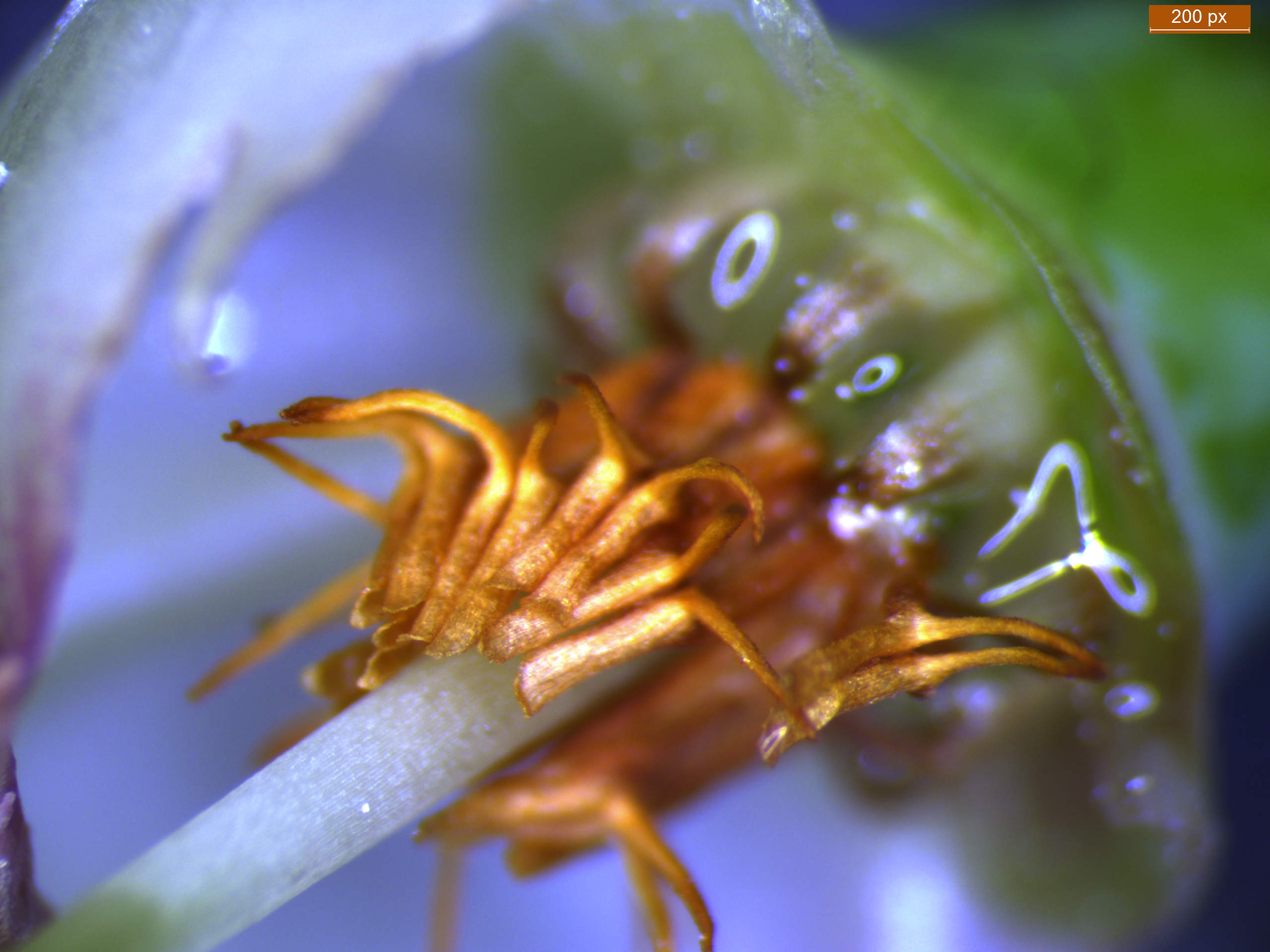
Flowers display remarkable diversity, much of which is shaped by interactions with pollinators. While various floral traits are considered adaptations to pollination, the function of many morphological features remains untested. In buzz-pollinated species, where bees use vibrations to extract pollen, anther morphology is diverse and can influence pollen removal and transfer. Poricidal anthers, common in these species, sometimes bear spur-like projections. These spurs are hypothesized to aid pollen release, but this has not been experimentally tested. Here, we investigated the function of anther spurs in Vaccinium myrtillus (Ericaceae). Using a laboratory setup, we conducted two complementary experiments: one where Bombus terrestris bumblebees foraged on flowers, and another applying 1 s artificial vibrations to mimic bee buzzes. We compared pollen release between flowers with intact anther spurs and those where spurs had been removed. Bumblebees produced vibrations during 90% of visits, irrespective of spur presence. Buzzing visits were shorter (21.70 ± 24 s; mean ± SD) and removed more pollen (60 ± 29%) than non-buzzing visits, which were three times longer (63.79 ± 70.45 s) but removed 23 ± 43% of pollen. Artificial 1 s buzzes removed an average of 23% of pollen. Spur removal increased pollen release in both the bee (54% to 60%) and the artificial buzzing experiment (18% to 28%). Our results suggest that anther spurs in V. myrtillus potentially act as a pollen-dispensing mechanism, but this effect depends on bee behaviour and visit duration. Further studies could explore other roles the spur has in interactions with non-buzzing visitors, such as regulating pollen release when visitors collect nectar.
References
Bartholomée O, Björnberg J, Smith HG, Kendall L (2024) Pollinator effectiveness and pollination dependency of bilberry (Vaccinium myrtillus) in Swedish hemi-boreal forests. Journal of Pollination Ecology 35:135–143.
Bates D, Mächler M, Bolker B, Walker S (2015) Fitting Linear Mixed-Effects Models Using lme4. Journal of Statistical Software 67
Beug HJ (2004) Leitfaden der Pollenbestimmung für Mitteleuropa und angrenzende Gebiete (Guide to the Pollen Analysis for Central Europe and the Adjacent Areas). Pfeil, München.
Bochorny T, Bacci LF, Dellinger AS, Michelangeli FA, Goldenberg R, Brito VLG (2021) Connective appendages in Huberia bradeana (Melastomataceae) affect pollen release during buzz pollination Ren Z-X (ed). Plant Biology 23:556–563.
Bochorny T, Michelangeli FA, Almeda F, Goldenberg R (2019) Phylogenetics, morphology and circumscription of Cambessedesieae: a new Neotropical tribe of Melastomataceae. Botanical Journal of the Linnean Society 190:281–302.
Bradshaw HD, Schemske DW (2003) Allele substitution at a flower colour locus produces a pollinator shift in monkeyflowers. Nature 426:176–178.
Buchmann SL (1983) Buzz pollination in angiosperms. Handbook of experimental pollination biology. In: Handbook of experimental pollination biology. 73–113.
Buchmann SL (1989) Original papers Bees assess pollen returns while sonicating Solanum flowers. Oecologia 81:289–294.
Campbell DR, Bischoff M, Lord JM, Robertson AW (2010) Flower colour influences insect visitation in alpine New Zealand. Ecology 91:2638–2649.
Castellanos, MC, Wilson P, Keller SJ, Wolfe AD, Thomson JD (2006) Anther evolution: pollen presentation strategies when pollinators differ. The American Naturalist, 167:288-296.
Clausing G, Renner SS (2001) Molecular phylogenetics of Melastomataceae and Memecylaceae: implications for character evolution. American Journal of Botany 88:486–498.
Conner JK, Sterling A (1995) Testing hypotheses of functional relationships: a comparative survey of correlation patterns among floral traits in five insect‐pollinated plants. American Journal of Botany 82:1399-1406.
Da Rocha MJR, Guimarães PJF, Michelangeli FA, Nogueira Batista JA (2018) Taxonomy of Marcetieae: A New Neotropical Tribe of Melastomataceae. International Journal of Plant Sciences 179:50–74.
Dafni A (1984) Mimicry and Deception in Pollination. Annual Review of Ecology and Systematics 15:259–278.
De Luca PA, Vallejo-Marín M (2013) What’s the ‘buzz’ about? The ecology and evolutionary significance of buzz-pollination. Current Opinion in Plant Biology 16:429–435.
Dellinger A, Penneys D, Staedler Y, Fragner L, Weckwerth W, Schönenberger J (2014) A Specialized Bird Pollination System with a Bellows Mechanism for Pollen Transfer and Staminal Food Body Rewards. Current Biology 24:1615–1619.
Dorr LJ (1981) The Pollination Ecology of Zenobia (Ericaceae). American Journal of Botany 68:1325–1332.
Faegri K (1986) The solanoid flower. Transactions of the Botanical Society of Edinburgh 45:51–59.
Galen C (1989) Measuring Pollinator-Mediated Selection on Morphometric Floral Traits: Bumblebees and the Alpine Sky Pilot, Polemonium viscosum. Evolution 43:882–890.
Harder LD, Thomson JD (1989) Evolutionary Options for Maximizing Pollen Dispersal of Animal-Pollinated Plants. The American Naturalist 133:323–344.
Harder LD, Wilson WG (1994) Floral evolution and male reproductive success: Optimal dispensing schedules for pollen dispersal by animal-pollinated plants. Evolutionary Ecology 8:542–559.
Hartig F (2016) DHARMa: residual diagnostics for hierarchical (multi-level/mixed) regression models. https://CRAN.R-project.org/package=DHARMa
Hempel De Ibarra N, Langridge KV, Vorobyev M (2015) More than colour attraction: behavioural functions of flower patterns. Current Opinion in Insect Science 12:64–70.
Hermann PM, Palser BF (2000) Stamen development in the Ericaceae. I. Anther wall, microsporogenesis, inversion, and appendages. American Journal of Botany 87:934–957.
Jankauski M, Ferguson R, Russell A, Buchmann S (2022) Structural dynamics of real and modelled Solanum stamens: implications for pollen ejection by buzzing bees. Journal of The Royal Society Interface 19:20220040.
Johnson SD, Harder LD (2023) The economy of pollen dispersal in flowering plants. Proceedings of the Royal Society B: Biological Sciences 290
Judd WS (1979) Generic Relationships in the Andromedeae (Ericaceae). Journal of the Arnold Arboretum 60:477–503.
Kartonegoro A, Veldkamp JF, Hovenkamp P, Van Welzen P (2018) A revision of Dissochaeta (Melastomataceae, Dissochaeteae). PhytoKeys 107:1–178.
Kawai Y, Kudo G (2009) Effectiveness of buzz pollination in Pedicularis chamissonis : significance of multiple visits by bumblebees. Ecological Research 24:215–223.
Kern BR, Carley LN, Moeller DA (2023) Direct tracking of pollen with quantum dots reveals surprising uniformity in dispersal distance across 11 populations of an annual plant. American Journal of Botany 110
King MJ, Buchmann SL (1996) Sonication Dispensing of Pollen from Solanum laciniatum Flowers. Functional Ecology 10:449.
Kuznetsova A, Brockhoff PB, Christensen RHB (2017) lmerTest Package: Tests in Linear Mixed Effects Models. Journal of Statistical Software 82
Lenth RV (2024) emmeans: Estimated Marginal Means, aka Least-Squares Means. [online] URL: https://CRAN.R-project.org/package=emmeans
Lloyd DG, Yates JMA (1982) Intrasexual Selection and the Segregation of Pollen and Stigmas in Hermaphrodite Plants, Exemplified by Wahlenbergia albomarginata (Campanulaceae). 36:903–913.
Lüdecke D (2023) sjPlot: data visualization for statistics in social science. R package version 2.8. 14 https://CRAN.R-project.org/package=sjPlot
Luo Z, Zhang D, Renner SS (2008) Why two kinds of stamens in buzz‐pollinated flowers? Experimental support for Darwin’s division‐of‐labour hypothesis. Functional Ecology 22:794–800.
Melo LRF, Vasconcelos TNC, Caetano APS, De Brito VLG (2022) Stamen Diversity in Melastomataceae: Morphology, Colour, and Function. In: Goldenberg R, Michelangeli FA, Almeda F (eds) Systematics, Evolution, and Ecology of Melastomataceae. Springer International Publishing, Cham, pp 609–628.
Michelangeli FA, Guimaraes PJF, Penneys DS, Almeda F, Kriebel R (2013) Phylogenetic relationships and distribution of New World Melastomeae (Melastomataceae): New World Melastomeae (Melastomataceae). Botanical Journal of the Linnean Society 171:38–60.
Michener CD (1962) An Interesting Method of Pollen Collecting by Bees from Flowers with Tubular Anthers. Revista De Biologia Tropical 10:165–175.
Minnaar C, Anderson B, De Jager ML, Karron JD (2019) Plant–pollinator interactions along the pathway to paternity. Annals of Botany 123:225–245.
Moquet L, Bruyère L, Pirard B, Jacquemart A (2017) Nectar foragers contribute to the pollination of buzz‐pollinated plant species. American Journal of Botany 104:1451–1463.
Moquet L, Vanderplanck M, Moerman R, Quinet M, Roger N, Michez D, Jacquemart A-L (2017) Bumblebees depend on ericaceous species to survive in temperate heathlands Schonrogge K, Brady S (eds). Insect Conservation and Diversity 10:78–93.
Muchhala N (2007) Adaptive Trade‐Off in Floral Morphology Mediates Specialization for Flowers Pollinated by Bats and Hummingbirds. The American Naturalist 169.
Müller H (1873) Die Befruchtung der Blumen durch Insekten und die gegenseitigen Anpassungen beider: Ein Beitrag zur Erkenntnis des ursächlichen Zusammenhanges in der organischen Natur. W. Engelmann. 355-356.
Müller H (1883) Fertilization of flowers. Macmillan, London.
Passos LS, Telles FJ, Goldenberg R, Amano E, Maia FR (2022) What is the role of stamen appendages in the buzz-pollinated Huberia insignis (Melastomataceae)? Flora 293:152113.
Raguso RA (2008) Wake Up and Smell the Roses: The Ecology and Evolution of Floral Scent. Annual Review of Ecology, Evolution, and Systematics 39:549–569.
Renner SS (1989) A Survey of Reproductive Biology in Neotropical Melastomataceae and Memecylaceae. Annals of the Missouri Botanical Garden 76:496.
Renner SS (1993) Phylogeny and classification of the Melastomataceae and Memecylaceae. Nordic Journal of Botany 13:519–540.
Schiestl FP, Johnson SD (2013) Pollinator-mediated evolution of floral signals. Trends in Ecology & Evolution 28:307–315.
Schneider CA, Rasband WS, Eliceiri KW (2012) NIH Image to ImageJ: 25 years of image analysis. Nature Methods 8:671–675.
Trunschke J, Lunau K, Pyke GH, Ren Z-X, Wang H (2021) Flower Colour Evolution and the Evidence of Pollinator-Mediated Selection. Frontiers in Plant Science 12:617851.
Ulyshen M, Urban‐Mead KR, Dorey JB, Rivers JW (2023) Forests are critically important to global pollinator diversity and enhance pollination in adjacent crops. Biological Reviews 98:1118–1141.
Vallejo-Marín M (2019) Buzz pollination: studying bee vibrations on flowers. New Phytologist 224:1068–1074.
Vallejo-Marín M (2022) How and why do bees buzz? Implications for buzz pollination Bauer U (ed). Journal of Experimental Botany 73:1080–1092.
Vallejo-Marín M, Lundgren A (2025) Gradual pollen release in a buzz‐pollinated plant: Investigating pollen presentation theory under bee visitation. Functional Ecology 1365-2435.70189.
Vallejo-Marín M, Pereira Nunes CE, Russell AL (2022) Anther cones increase pollen release in buzz-pollinated Solanum flowers. Evolution 76:931–945.
Vasquez-Castro CA, Morel E, Garcia-Simpson B, Vallejo-Marín M (2025) The fate of pollen in two morphologically contrasting buzz-pollinated Solanum flowers.
Weeg MS, Grant JB (2025) Buzz pollination on non-poricidal aspen bluebell flowers. The Southwestern Naturalist 69
Zhou C, Yu Y, Liu Y, Yang S, Chen Y (2024) Gradual pollen presentation in Vaccinium corymbosum ‘Bluecrop’: an adaptive mechanism to improve pollination efficiency and outcrossing. PeerJ 12:e17273.
Zuur AF, Ieno EN, Walker NJ, Saveliev AA, Smith GM (2009) Mixed effects models and extensions in ecology with R. Springer, New York.
Downloads
Published
How to Cite
Issue
Section
License
Copyright (c) 2025 Lisette van Kolfschoten, Mario Vallejo-Marin

This work is licensed under a Creative Commons Attribution 4.0 International License.