
Low overnight temperatures delay ‘Hass’ avocado (Persea americana) female flower opening, leading to nocturnal flowering
DOI:
https://doi.org/10.26786/1920-7603(2018)12Abstract
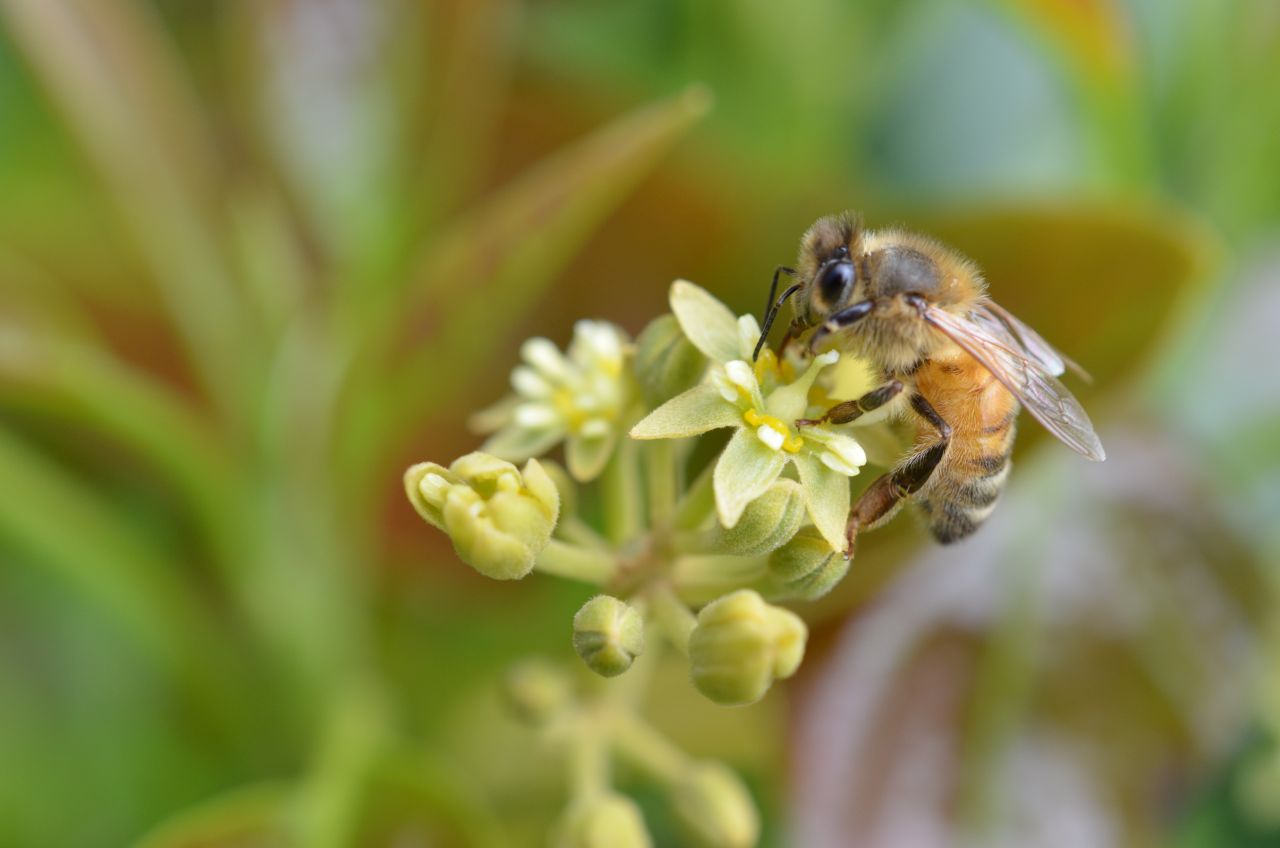
Avocado (Persea americana) has synchronously protogynous flowers: flowers open first in female phase before closing and opening the next day in male phase. Cultivars are grouped based on whether the flowers typically first open in female phase in the morning (type A), or in the afternoon (type B). However, it is known that environmental factors can alter the timing of flower opening, with cold temperatures being shown to affect the timing of flowering. The aim of this study was to investigate how low spring temperatures in New Zealand affect the flowering cycle of commercial avocado cultivars, focusing primarily on the receptive female phase of ‘Hass’, a type A cultivar. Time-lapse photography was used to assess flower opening times of ‘Hass’ over three years. Decreasing minimum overnight temperatures were associated with a delay in the timing of ‘Hass’ female flower phases and resulted in nocturnal flowering of both male and female phase flowers. We recorded insects visiting female flowers at night, and some nocturnal flower visitors collected were carrying avocado pollen. Our study suggests that nocturnal pollination needs to be considered for avocados grown in temperate regions. Furthermore, as the timing of the female phase of ‘Hass’ varied significantly with overnight temperature, the activity patterns of potential pollinators need to be considered to ensure adequate pollinator activity across the range of times in which ‘Hass’ flowers are receptive.
References
Alcaraz ML, Montserrat M, Hormaza JI (2011) In vitro pollen germination in avocado (Persea Americana Mill.): Optimization of the method and effect of temperature. Scientia Horticulturae 130: 152-156.
Buxton MN, Anderson BJ, Lord JM 2018. The secret service – analysis of the available knowledge on moths as pollinators in New Zealand. New Zealand Journal of Ecology 42: 1-9.
Corbet SA, Fussell M, Ake R, Fraser A, Gunson C, Savage A, Smith K (1993) Temperature and the pollinating activity of social bees. Ecological Entomology 18:17-30.
Davenport TL (1986) Avocado flowering. Horticultural Reviews 8: 257-289.
Degani C, El-Batsri R, Gazit S (1997) Outcrossing rate, yield, and selective fruit abscission in ‘Ettinger’ and ‘Ardith’ avocado blocks. Journal of the American Society for Horticultural Science. 6: 813-817.
Dixon J, Smith DB, Greenwood AC, Elmsly TA (2006) Putative timing of irreversible commitment to flowering of Hass avocado trees in the Western Bay of Plenty. New Zealand Avocado Growers Association Annual Research Report 6: 13-20.
Evans LJ, Goodwin RM, McBrydie HM (2010) Factors affecting ‘Hass” avocado (Persea americana) fruit set in New Zealand. New Zealand Plant Protection Society 63: 214-218.
Garner LC, Lovatt CJ (2015) Physiological factors affecting flower and fruit abscission of ‘Hass’ avocado. Scientia Horticulturae 199: 32-40.
Gazit S (1976) Pollination and fruit set of avocado. Proceedings of the First International Tropical Fruit Short Course: The Avocado. 88-92.
Gazit S, Gafni E (1986) Effect of hand pollination with different pollen donors on initial fruit set in avocado. Israel Agrisearch 1: 3-17.
Goldring A, Gazit S, Degani C (1987) Isozyme analysis of mature avocado embryos to determine outcrossing rate in a ‘Hass’ plot. Journal of the American Society for Horticultural Science. 112: 389-392Hedhly A, Hormaza JI, Herrero M (2005) The effect of temperature on pollen germination, pollen tube growth, and stigmatic receptivity in peach. Plant Biology, 7(5), 476-483.
Henshall WR, Snelgar WP (1989) A small unaspirated screen for air temperature measurement. New Zealand Journal of Crop and Horticultural Science 17: 103-107.
Ish-Am G, Eisikowitch D (1991) New insight into avocado flowering in relation to its pollination. California Avocado Society 1991 Yearbook, 75:125-137.
Ish-Am G, Eisikowitch D (1993) The behaviour of honey bees (Apis melifera) visiting avocado (Persea americana) flowers and their contribution to its pollination. Journal of Apicultural Research 32: 175-186.
Ish-Am G, Regev Y, Peterman Y, Lahav E, Degani C, Elbatzri R, Gazit S (1998) Improving avocado pollination with bumblebees: 3 seasons summary. California Avocado Society 1998 Yearbook 82: 119-135.
Ish-Am G, Lahav E (2011) Evidence for a major role of honeybees (Apis mellifera) rather than wind during avocado (Persea americana Mill.) pollination. The Journal of Horticultural Science and Biotechnology, 86:589-594.
King C, Ballantyne G, Willmer PG (2013) Why flower visitation is a poor proxy for pollination: measuring single-visit pollen deposition, with implications for pollination networks and conservation. Methods in Ecology and Evolution 4: 811-818.
Knight Jr RJ (2002) History, distribution and uses. The Avocado: Botany, Production and Uses, eds. AW Whiley, B Schaffer and BN Wolstenholme, CAB International.
Loupassaki M, Vasilakakis M, Androulakis I (1997) Effect of pre-incubation humidity and temperature treatment on the in vitro germination of avocado pollen grains. Euphytica 94: 247-251.
Milatović D, Nikolić D, Radović A (2016) The effect of temperature on pollen germination and pollen tube growth of apricot cultivars. Acta Horticulturae, 1139:359-362. DOI: 10.17660/ActaHortic.2016.1139.62
Pattemore DE, Wilcove DS (2012) Invasive rats and recent colonist birds partially compensate for the loss of endemic New Zealand pollinators. Proceedings of the Royal Society B: Biological Sciences. 279: 1597-1605.
Pham VT, Herrero M, Hormaza JI (2015) Effect of temperature on pollen germination and pollen tube growth in longan (Dimocarpus longan Lour.). Scientia Horticulturae 197, 470-475
Popic TJ, Wardle GM, Davila YC (2013) Flower-visitor networks only partially predict the function of pollen transport by bees. Austral Ecology 38: 76-86.
Read SF, Howlett BG, Jesson LK, Pattemore DE (2017) Insect visitors to avocado flowers in the Bay of Plenty, New Zealand. New Zealand Plant Protection. 70: 38-44.
Sedgley M (1977) The effect of temperature on floral behaviour, pollen tube growth and fruit set in the avocado. Journal of Horticultural Science 52: 135-141.
Sedgley M, Annells CM (1981) Flowering and fruit-set response to temperature in the avocado cultivar ‘Hass”. Scientia Horticulturae 14:27-33.
Sedgley M, Grant WJR (1983) Effect of low temperatures during flowering on floral cycle and pollen tube growth in nine avocado cultivars. Scientia Horticulture 18: 207-213.
Vázquez DP, Morris WF, Jordano P (2005) Interaction frequency as a surrogate for the total effect of animal mutualists on plants. Ecology Letters 8: 1088-1094.
Whiley AW, Winston EC (1987) Effect of temperature at flowering on varietal productivity in some avocado-growing areas in Australia. South African Avocado Growers’ Association Yearbook 10:45-47.
Zinn KE, Tunc-Ozdemir M, Harper JF (2010) Temperature stress and plant sexual reproduction: uncovering the weakest links. Journal of Experimental Botany 61: 1959-1968
Published
How to Cite
Issue
Section
License
Copyright (c) 2018 David Errol Pattemore, Max N Buxton, Brian T Cutting, Heather M McBrydie, Robert Mark Goodwin, Arnon Dag

This work is licensed under a Creative Commons Attribution 4.0 International License.