
Disentangling effects of flower symmetry and orientation on pollination
Saxifraga as a study case
DOI:
https://doi.org/10.26786/1920-7603(2026)870Keywords:
Flower symmetry, flower orientation, pollen placement, bilateral symmetry, radial symmetry, saxifragaAbstract
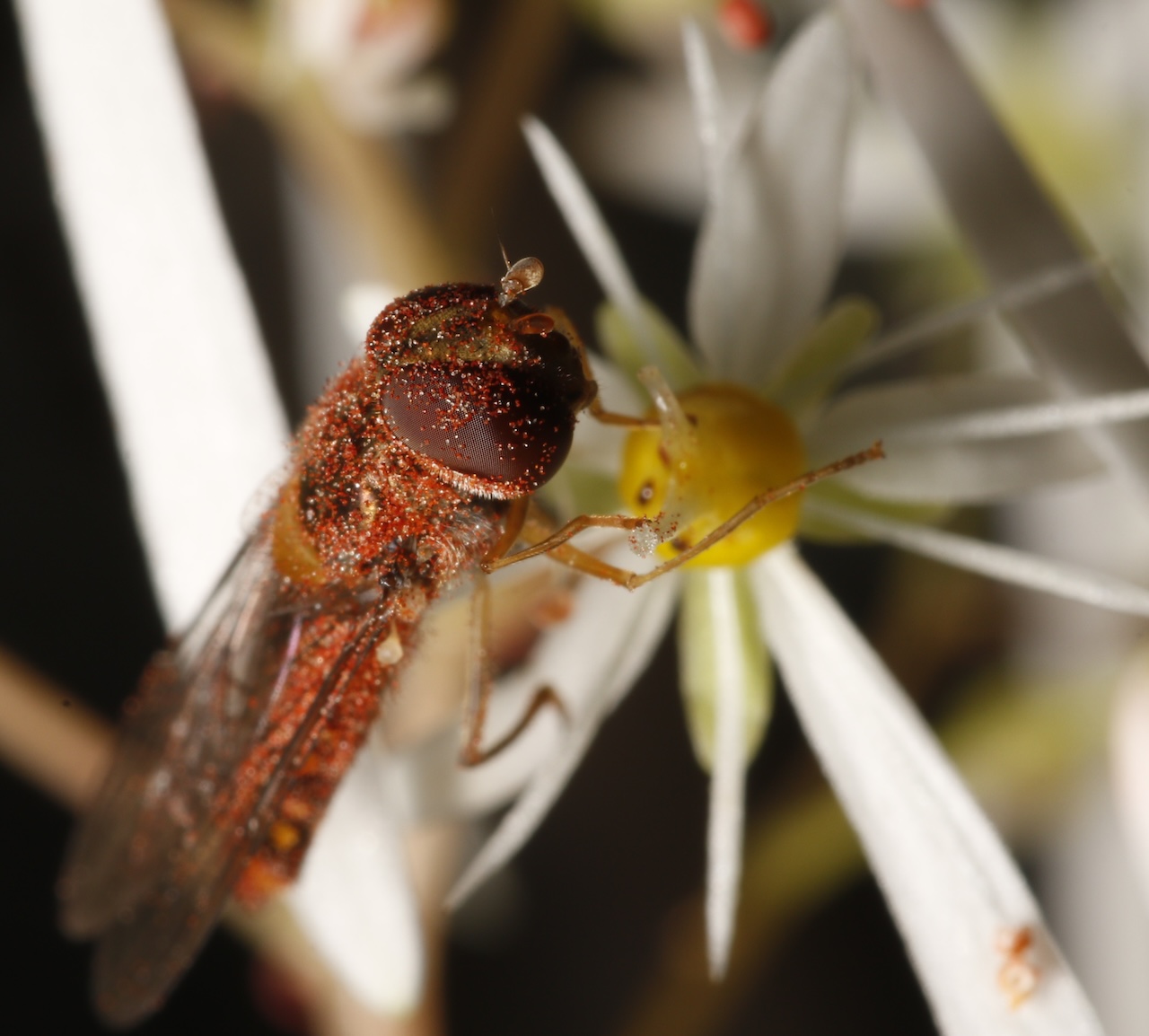
Some Saxifraga species possess an intraindividual variation of flower symmetry and orientation: flowers with horizontally oriented corolla planes are radially symmetrical, whereas flowers with vertically oriented corolla planes are bilaterally symmetrical. Petal size, petal colouration, sequence of stamen movement, and interpetal angles are induced by gravity and thus correlate with symmetry and orientation. The flower visitors' responses to flower symmetry and orientation were tested in the field with fly-pollinated Saxifraga stellaris and S. cuneifolia. Video analysis of approach and landing behaviour showed that the landing site on the flowers was independent of flower symmetry and orientation. The flower visitors’ body axis, however, was aligned with the flowers’ vertical axis in most cases, since most flies land with their heads facing upwards. The flies' movement on the flower is more constrained in vertically oriented flowers: instead of walking around the protruding carpels, they walk over them. In a lab-based experiment, the deposition of pollen surrogate on stigmas of S. fortunei was tested using Episyrphus balteatus hoverflies that were dusted with pigment particles before a single flower visit. The hoverflies deposited more pigment particles on vertically oriented flowers, irrespective of flower symmetry. It is discussed whether vertically oriented bilaterally symmetrical Saxifraga flowers benefit from the avoidance of self-pollination and reduced pollen clogging. The role of differences in bilateral symmetry among Saxifraga species with regard to the display of floral guides in the upper petals, initiation of stamen movement in the lower stamens, petal length and interpetal angles is discussed in the context of pollination efficiency.
References
An L, Neimann A, Eberling E, Algora H, Brings S, Lunau K (2018) The yellow specialist: Dronefly Eristalis tenax prefers different yellow colours for landing and proboscis extension. Journal of Experimental Biology 221: jeb184788.
Andrikopoulos CJ, Cane JH (2018) Comparative pollination efficacies of five bee species on raspberry. Journal of Economic Entomology111:2513–2519.
Armbruster WS, Corbet SA, Vey AJM, Liu S-J, Huang S-Q (2014) In the right place at the right time: Parnassia resolves the herkogamy dilemma by accurate repositioning of stamens and stigmas. Annals of Botany 113:97–103.
Armbruster WS, Hansen TF, Pelabon C, Perez-Barrales R, Maad J (2009) The adaptive accuracy of flowers: measurement and microevolutionary patterns. Annals of Botany 103:1529–1545.
Armbruster WS, Muchhala N (2009) Associations between floral specialization and species diversity: cause, effect, or correlation? Evolutionary Ecology 23:159–179.
Armbruster WS, Muchhala N (2020) Floral reorientation: the restoration of pollination accuracy after accidents. New Phytologist 227:232–243.
Arnon R, Keasar T, de Ibarra NH, Cohen D, Shmida A (2009) Learning of colored targets with vertical and horizontal components by bumblebees (Bombus terrestris L.). Israel Journal of Plant Sciences 57:193–201.
Barrett SCH (2002) Sexual interference of the floral kind. Heredity 88:154–159.
Braitenberg V, Ferretti CT (1966) Landing reaction of Musca domestica induced by visual stimuli. Die Naturwissenschaften 53:155–155.
Chinery M, Jung I, Riley G, Chinery M, Chinery M (1984) Insekten Mitteleuropas: ein Taschenbuch für Zoologen und Naturfreunde, 3., bearb. Auflage. Parey, Hamburg.
Chittka L, Raine NE (2006) Recognition of flowers by pollinators. Current Opinion in Plant Biology 9:428–435.
Citerne HL, Jabbour F, Nadot S, Damerval C (2010) The evolution of floral symmetry. Advances in Botanical Research 54,:85-137.
Coen ES, Nugent JM, Luo D, Bradley D, Cubas P, Chadwick M (1995) Evolution of floral symmetry. Philosophical Transactions of the Royal Society of London. Series B: Biological Sciences 350:35–38.
Conti E, Soltis DE, Hardig TM, Schneider J (1999) Phylogenetic relationships of the Silver Saxifrages (Saxifraga, Sect. Ligulatae Haworth): Implications for the evolution of substrate specificity, life histories, and biogeography. Molecular Phylogenetics and Evolution 13:536–555.
Cubas P (2004) Floral zygomorphy, the recurring evolution of a successful trait. BioEssays 26:1175–1184.
Culbert BM, Forrest J (2016) Floral symmetry affects bumblebee approach consistency in artificial flowers. Journal of Pollination Ecology 18:1–6.
Cunha NLD, Aizen MA (2023) Reduced pollination in bilateral flowers could reflect selfing avoidance. Flora 300:152220.
Dacke M, Srinivasan MV (2007) Honeybee navigation: distance estimation in the third dimension. Journal of Experimental Biology 210:845–853.
Dafni A, Kevan PG (1996) Floral symmetry and nectar guides: ontogenetic constraints from floral development, colour pattern rules and functional significance. Botanical Journal of the Linnean Society 120:371–377.
Deng J, Drew BT, Mavrodiev EV, Gitzendanner MA, Soltis PS, Soltis DE (2015) Phylogeny, divergence times, and historical biogeography of the angiosperm family Saxifragaceae. Molecular Phylogenetics and Evolution 83:86–98.
Dinkel T, Lunau K (2001) How drone flies (Eristalis tenax L., Syrphidae, Diptera) use floral guides to locate food sources. Journal of Insect Physiology 47:1111–1118.
Donoghue MJ, Ree RH, Baum DA (1998) Phylogeny and the evolution of flower symmetry in the Asteridae. Trends in Plant Science 3:311–317.
Eckert H (1983) On the landing response of the blowfly, Calliphora erythrocephala. Biological Cybernetics 47:119–130.
Egelhaaf M, Borst A (1993) A look into the cockpit of the fly: visual orientation, algorithms, and identified neurons. The Journal of Neuroscience 13:4563–4574.
Endress PK (1999) Symmetry in flowers: Diversity and evolution. International Journal of Plant Sciences 160:S3–S23.
Endress PK (2001a) Evolution of floral symmetry. Current Opinion in Plant Biology 4:86–91.
Endress PK (2001b) Origins of flower morphology. Journal of Experimental Zoology 291:105–115.
Endress PK (2012) The immense diversity of floral monosymmetry and asymmetry across Angiosperms. The Botanical Review 78:345–397.
Evangelista C, Kraft P, Dacke M, Reinhard J, Srinivasan MV (2010) The moment before touchdown: landing manoeuvres of the honeybee Apis mellifera. Journal of Experimental Biology 213:262–270.
Fenster CB, Armbruster WS, Dudash MR (2009) Specialization of Flowers: Is floral orientation an overlooked first step? New Phytologist 183:502–506.
Fenster CB, Armbruster WS, Wilson P, Dudash MR, Thomson JD (2004) Pollination syndromes and floral specialization. Annual Review of Ecology, Evolution, and Systematics 35:375–403.
Fujii S, Tokuoka Y, Maki M (2020) Leaf morphology of Saxifraga fortunei var. obtusocuneata and var. suwoensis (Saxifragaceae). Acta Phytotaxonomica et Geobotanica 71:231–242.
Gerhardt E, Gerhardt M (2021) Das große BLV Handbuch Insekten, 1. Auflage. BLV, München.
Giurfa M, Lehrer M (2001) Honeybee vision and floral displays: from detection to close-up recognition. In: Chittka L, Thomson JD (eds) Cognitive Ecology of Pollination, 1st edn. Cambridge University Press, pp 61–82.
Golding YC, Sullivan MS, Sutherland JP (1999) Visits to manipulated flowers by Episyrphus balteatus (Diptera: Syrphidae): Partitioning the signals of petals and anthers. Journal of Insect Behavior 12:39–45.
Gómez JM, Perfectti F, Camacho JPM (2006) Natural selection on Erysimum mediohispanicum flower shape: Insights into the evolution of zygomorphy. The American Naturalist 168:531–545.
Gong Y-B, Huang S-Q (2011) Temporal stability of pollinator preference in an alpine plant community and its implications for the evolution of floral traits. Oecologia 166:671–680.
Gorenflo A, Diekötter T, Van Kleunen M, Wolters V, Jauker F (2017) Contrasting pollination efficiency and effectiveness among flower visitors of Malva sylvestris, Borago officinalis and Onobrychis viciifolia. Journal of Pollination Ecology 21:62–70.
Guerrina M, Casazza G, Dagnino D, Macrì C, Roccotiello E, Minuto L (2022) Reproductive ecology of Saxifraga florulenta , a monocarpic perennial paleo-endemic of the Alps. Plant Biosystems - An International Journal Dealing with all Aspects of Plant Biology 156:252–260.
Harder LD, Routley MB (2006) Pollen and ovule fates and reproductive performance by flowering plants. In: Harder LD, Barrett SCH (eds) Ecology and Evolution of Flowers. Oxford University Press, Oxford, pp 61–80.
Harder LD, Wilson WG (1998) Theoretical consequences of heterogenous transport conditions for pollen dispersal by animals. Ecology 79:2789–2807.
Hempel de Ibarra N, Langridge KV, Vorobyev M (2015) More than colour attraction: behavioural functions of flower patterns. Current Opinion in Insect Science 12:64–70.
Henning T, Weigend M (2012) Total control – Pollen presentation and floral longevity in Loasaceae (Blazing Star Family) are modulated by light, temperature and pollinator visitation rates. PLoS ONE 7:e41121.
Herrera J, Arista M, Ortiz PL (2008) Perianth organization and intra‐specific floral variability. Plant Biology 10:704–710.
Heß D (ed) (2001) Alpenblumen: erkennen, verstehen, schützen; Ulmer, Stuttgart.
Hileman LC (2014) Trends in flower symmetry evolution revealed through phylogenetic and developmental genetic advances. Philosophical Transactions of the Royal Society B: Biological Sciences 369:20130348.
Holsinger KE, Thomson JD (1994) Pollen discounting in Erythronium grandiflorum: Mass-action estimates from pollen transfer dynamics. The American Naturalist 144:799–812. https://www.jstor.org/stable/2463012
Horridge A (2005) What the honeybee sees: A review of the recognition system of Apis mellifera. Physiological Entomology 30:2–13.
Jeavons E, Chevrie O, Le Lann C, Renault D, Floch M, Bourgeois T, Bodiguel R, Fontaine‐Breton T, Van Baaren J (2022) Exploitative competition for floral resources reduces sugar intake but differently impacts the foraging behaviour of two non‐bee flower visitors. Oikos 2022:oik.08576.
Jirgal N, Ohashi K (2023) Effects of floral symmetry and orientation on the consistency of pollinator entry angle. The Science of Nature 110:19.
Kalisz S, Ree RH, Sargent RD (2006) Linking floral symmetry genes to breeding system evolution. Trends in Plant Science 11:568–573.
Kevan PG (1972) Insect Pollination of High Arctic Flowers. The Journal of Ecology 60:831–847.
King C, Ballantyne G, Willmer PG (2013) Why flower visitation is a poor proxy for pollination: measuring single‐visit pollen deposition, with implications for pollination networks and conservation. Methods in Ecology and Evolution 4:811–818.
Koethe S, Bloemer J, Lunau K (2017) Testing the influence of gravity on flower symmetry in five Saxifraga species. The Science of Nature 104:37.
Köhlein F (1995) Saxifragen und andere Steinbrechgewächse, 2., überarb. u. neugest. Aufl. Ulmer, Stuttgart.
Kudo G (2003) Anther arrangement influences pollen deposition and removal in hermaphrodite flowers. Functional Ecology 17:349–355.
Lauber K, Wagner G, Gygax A (2018) Flora helvetica: illustrierte Flora der Schweiz: mit Artbeschreibungen und Verbreitungskarten von 3200 wild wachsenden Farn- und Blütenpflanzen, einschliesslich wichtiger Kulturpflanzen, 6., vollständig überarbeitete Auflage. Haupt Verlag, Bern.
Lázaro A, Hegland SJ, Totland Ø (2008) The relationships between floral traits and specificity of pollination systems in three Scandinavian plant communities. Oecologia 157:249–257.
Lehrer et al. (1995) Shape vision in bees: innate preference for flower-like patterns. Philosophical Transactions of the Royal Society of London: Series B: Biological Sciences 347:123–137.
Lehrer M (1999) Dorsoventral asymmetry of colour discrimination in bees. Journal of Comparative Physiology A 184:195–206.
Lloyd DG, Webb CJ (1986) The avoidance of interference between the presentation of pollen and stigmas in angiosperms I. Dichogamy. New Zealand Journal of Botany 24:135–162.
Lunau K (1992) Innate recognition of flowers by bumble bees: orientation of antennae to visual stamen signals. Canadian Journal of Zoology 70:2139–2144.
Lunau K (2000) The ecology and evolution of visual pollen signals. Plant Systematics and Evolution 222:89–111.
Lunau K (2006) Stamens and mimic stamens as components of floral colour patterns. Botanische Jahrbücher für Systematik, Pflanzengeschichte und Pflanzengeographie 127:13–41.
Lunau K (2014) Visual ecology of flies with particular reference to colour vision and colour preferences. Journal of Comparative Physiology A 200:497–512.
Lunau K, De Camargo MGG, Brito VLG (2024) Pollen, anther, stamen, and androecium mimicry. Plant Biology 26:349–368.
Lunau K, Fieselmann G, Heuschen B, van de Loo A (2006) Visual targeting of components of floral colour patterns in flower-naïve bumblebees (Bombus terrestris; Apidae). Naturwissenschaften 93:325–328.
Lunau K, Maier EJ (1995) Innate colour preferences of flower visitors. Journal of Comparative Physiology A 177:1–19.
Lunau K, Unseld K, Wolter F (2009) Visual detection of diminutive floral guides in the bumblebee Bombus terrestris and in the honeybee Apis mellifera. Journal of Comparative Physiology A 195:1121–1130.
Lunau K, Verhoeven C (2017) Wie Bienen Blumen sehen: Falschfarbenaufnahmen von Blüten. Biologie in unserer Zeit 47:120–127.
Lunau K, Wacht S (1994) Optical releasers of the innate proboscis extension in the hoverfly Eristalis tenax L. (Syrphidae, Diptera). Journal of Comparative Physiology A 174:575–579.
Lunau K, Wacht S, Chittka L (1996) Colour choices of naive bumble bees and their implications for colour perception. Journal of Comparative Physiology A 178:477–489.
Luo D, Carpenter R, Vincent C, Copsey L, Coen E (1996) Origin of floral asymmetry in Antirrhinum. Nature 383:794–799.
MacInnis G, Forrest J (2017) Quantifying pollen deposition with macro photography and “stigmagraphs.” Journal of Pollination Ecology 20:13–21.
Macior LW (1974) Behavioral aspects of coadaptations between flowers and insect pollinators. Annals of the Missouri Botanical Garden 61:760–769.
Naghiloo S (2020) Patterns of symmetry expression in Angiosperms: Developmental and evolutionary lability. Frontiers in Ecology and Evolution 8:104.
Ne’eman G, Jürgens A, Newstrom‐Lloyd L, Potts SG, Dafni A (2010) A framework for comparing pollinator performance: Effectiveness and efficiency. Biological Reviews 85:435–451.
Neal PR, Dafni A, Giurfa M (1998) Floral symmetry and its role in plant-pollinator systems: Terminology, distribution, and hypotheses. Annual Review of Ecology and Systematics 29:345–373.
O’Meara BC, Smith SD, Armbruster WS, Harder LD, Hardy CR, Hileman LC, Hufford L, Litt A, Magallón S, Smith SA, Stevens PF, Fenster CB, Diggle PK (2016) Non-equilibrium dynamics and floral trait interactions shape extant angiosperm diversity. Proceedings of the Royal Society B: Biological Sciences 283:20152304.
Orford KA, Vaughan IP, Memmott J (2015) The forgotten flies: the importance of non-syrphid Diptera as pollinators. Proceedings of the Royal Society B: Biological Sciences 282:20142934.
Page ML, Nicholson CC, Brennan RM, Britzman AT, Greer J, Hemberger J, Kahl H, Müller U, Peng Y, Rosenberger NM, Stuligross C, Wang L, Yang LH, Williams NM1 (2021) A meta-analysis of single visit pollination effectiveness comparing honeybees and other floral visitors. American Journal of Botany 108:2196-2207.
Pohl M, Watolla T, Lunau K (2008) Anther-mimicking floral guides exploit a conflict between innate preference and learning in bumblebees (Bombus terrestris). Behavioral Ecology and Sociobiology 63:295–302.
R Core Team (2023) R: A Language and Environment for Statistical Computing. R Foundation for Statistical Computing, Vienna, Austria. https://www.R-project.org/
Raguso RA (2020) Don’t forget the flies: dipteran diversity and its consequences for floral ecology and evolution. Applied Entomology and Zoology 55:1–7.
Ren M-X, Tang J-Y (2012) Up and down: stamen movements in Ruta graveolens (Rutaceae) enhance both outcrossing and delayed selfing. Annals of Botany 110:1017–1025.
Reyes E, Sauquet H, Nadot S (2016) Perianth symmetry changed at least 199 times in angiosperm evolution. Taxon 65:945–964.
Robertson C (1888) Zygomorphy and its causes. I. Botanical Gazette 13:146–151.
Rodríguez I, Gumbert A, Hempel de Ibarra N, Kunze J, Giurfa M (2004) Symmetry is in the eye of the “beeholder”: innate preference for bilateral symmetry in flower-naïve bumblebees. Naturwissenschaften 91:374–377.
Sargent RD (2004) Floral symmetry affects speciation rates in angiosperms. Proceedings of the Royal Society of London. Series B: Biological Sciences 271:603–608.
Schindelin J, Arganda-Carreras I, Frise E, Kaynig V, Longair M, Pietzsch T, Preibisch S, Rueden C, Saalfeld S, Schmid B, Tinevez J-Y, White DJ, Hartenstein V, Eliceiri K, Tomancak P, Cardona A (2012) Fiji: an open-source platform for biological-image analysis. Nature Methods 9:676–682.
Schmeil O, Fitschen J, Parolly G, Rohwer JG, Koltzenburg M, Nordt B, Schmidt PA, Aas G, Fleischmann A, Gregor T, Raab-Straube E von, Vogt R (2019) Die Flora Deutschlands und angrenzender Länder: ein Buch zum Bestimmen aller wildwachsenden und häufig kultivierten Gefäß-pflanzen, 97., überarbeitete und erweiterte Auflage. Quelle & Meyer Verlag, Wiebelsheim.
Schneider CA, Rasband WS, Eliceiri KW (2012) NIH Image to ImageJ: 25 years of image analysis. Nature Methods 9:671–675.
Shin J-S, Kim Y-I, Jung E-K, Kim JH, Kim B-Y, Kim Y-D (2022) Saxifraga cortusifolia (Saxifragaceae): A new record for the Korean flora from Jejudo Island. Korean Journal of Plant Taxonomy 52:251–254.
Soltis DE (2003) Saxifraga (Saxifrages). In: eLS (ed) John Wiley & Sons, Ltd, 1st edn. Wiley
Spencer V, Kim M (2018) Re“CYC”ling molecular regulators in the evolution and development of flower symmetry. Seminars in Cell & Developmental Biology 79:16–26.
Srinivasan MV, Zhang SW, Chahl JS, Barth E, Venkatesh S (2000) How honeybees make grazing landings on flat surfaces. Biological Cybernetics 83:171–183.
Stebbins GL (1951) Natural selection and the differentiation of Angiosperm families. Evolution 5:299.
Stebbins GL (1970) Adaptive radiation of reproductive characteristics in Angiosperms, I: Pollination mechanisms. Annual Review of Ecology and Systematics 1:307–326.
Steinacher G, Wagner J (2010) Flower longevity and duration of pistil receptivity in high mountain plants. Flora - Morphology, Distribution, Functional Ecology of Plants 205:376–387.
Stewart AB, Diller C, Dudash MR, Fenster CB (2022) Pollination‐precision hypothesis: support from native honey bees and nectar bats. New Phytologist 235:1629–1640.
Taylor GK (2001) Mechanics and aerodynamics of insect flight control. Biological Reviews 76:449–471.
Thorp RW (2000) The collection of pollen by bees. Plant Systematics and Evolution 222:211–223.
Tkach N, Röser M, Miehe G, Muellner-Riehl AN, Ebersbach J, Favre A, Hoffmann MH (2015) Molecular phylogenetics, morphology and a revised classification of the complex genus Saxifraga (Saxifragaceae). Taxon 64:1159–1187.
Ushimaru A, Dohzono I, Takami Y, Hyodo F (2009) Flower orientation enhances pollen transfer in bilaterally symmetrical flowers. Oecologia 160:667–674.
Ushimaru A, Hyodo F (2005) Why do bilaterally symmetrical flowers orient vertically? Flower orientation influences pollinator landing behaviour. Evolutionary Ecology Research 7:151–160.
van Breugel F, Dickinson MH (2012) The visual control of landing and obstacle avoidance in the fruit fly Drosophila melanogaster. Journal of Experimental Biology 215:1783–1798.
Vöchting H (1886) Über Zygomorphie und deren Ursachen. Berichte der Deutschen Botanischen Gesellschaft 3:341-345.
Weberling F (1981) Morphologie der Blüten und der Blütenstände. Ulmer, Stuttgart.
Wehrhahn C, Hausen K, Zanker J (1981) Is the landing response of the housefly (Musca) driven by motion of a flow field? Biological Cybernetics 41:91–99.
West EL, Laverty TM (1998) Effect of floral symmetry on flower choice and foraging behaviour of bumble bees. Canadian Journal of Zoology 76:730–739.
Westerkamp C, Claßen-Bockhoff R (2007) Bilabiate flowers: The ultimate response to bees? Annals of Botany 100:361–374.
Wiegel M, Lunau K (2023) Flower symmetry in Saxifraga revisited. Plant Systematics and Evolution 309:6.
Wignall AE, Heiling AM, Cheng K, Herberstein ME (2006) Flower symmetry preferences in honeybees and their crab spider predators. Ethology 112:510–518.
Willmer P (2011) Pollination and Floral Ecology. Princeton University Press.
Wilmsen S, Gottlieb R, Junker RR, Lunau K (2017) Bumblebees require visual pollen stimuli to initiate and multimodal stimuli to complete a full behavioral sequence in close-range flower orientation. Ecology and Evolution 7:1384–1393.
Yeo I-K (2000) A new family of power transformations to improve normality or symmetry. Biometrika 87:954–959.
Yifeng Y, Subir B, Kay FD, Chengsen L (2014) Pollen morphology in Saxifraga (Saxifragaceae) from Ny- -Alesund, Svalbard, Arctic and its taxonomic significance. Advances in Polar Science 25:105–112.
Yu MY (2021) Horizontal orientation of zygomorphic flowers: significance for rain protection and pollen transfer. Plant Biology 23:156–161.
Zhang M, Wang C, Zhang C, Zhang D, Li K, Nie Z, Meng Y (2020) Phylogenetic relationships and biogeographic history of the unique Saxifraga sect. Irregulares (Saxifragaceae) from eastern Asia. Journal of Systematics and Evolution 58:958–971.
Downloads
Published
How to Cite
Issue
Section
License
Copyright (c) 2026 Manuel Wiegel, Klaus Lunau

This work is licensed under a Creative Commons Attribution 4.0 International License.