
Pollination facilitation and temporal changes of plant-floral visitor network in a serpentine shrubwood of Cuba
DOI:
https://doi.org/10.26786/1920-7603(2025)835Keywords:
beta diversity, core species, interactions, module, serpentinitic shrubwoodsAbstract
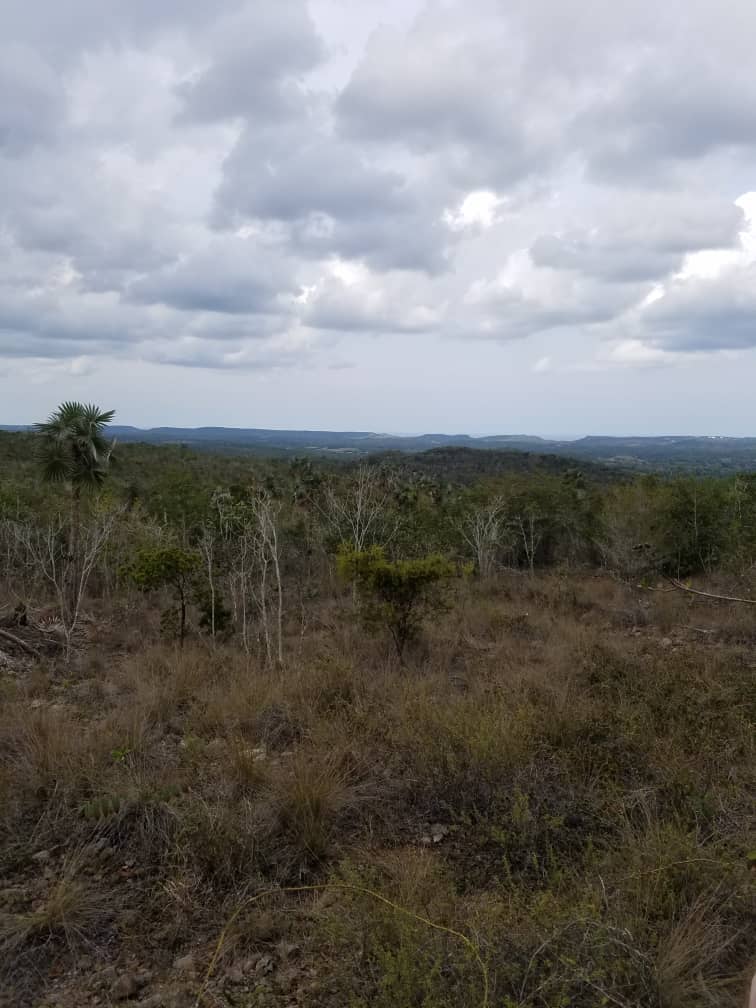
The stress-gradient hypothesis predicts that in stressful ecosystems, species interactions are facilitative rather than competitive. In Cuba, one of the more stressful environments for plants is serpentinitic shrubwoods (cuabales), which experience intense variations in precipitation and temperature. Plant facilitative mechanisms are reported in this ecosystem, and pollination facilitation could also occur. We hypothesize that in this seasonal ecosystem, characterized by harsh conditions, facilitative pollination interactions prevail accompanied by intense interaction rewiring and species turnover. This research analyzed the temporal variation of the plant-pollinator network of serpentinitic shrubwood in Lomas de Galindo, Mayabeque, Cuba. Data were obtained by monitoring diurnal plant-pollinator interactions for two days each month through one year. The network was composed of 31 plant species and 81 pollinator species, where ten modules of interactions were detected in the network. Nine species were identified as core species; four of them were plants that gathered the majority of interactions. However, plant core species change temporally. The changes in beta-diversity values were higher between the initial and final months of every season, which could be caused by the variations in phenology and changes in pollinators’ abundances. Facilitation occurred in six plant species that temporally segregate the pollination interactions and shaped the support of pollination in the community. For this reason, the conservation of pollination services in this ecosystem should be focused on these species.
References
Alameda D, Falcón B, Rijo G, de Vales D, Castañeda A, Leyva LM (2020) Diurnal pollination network of “Cuabales de Cajálbana”, a serpentine shrubwood in western Cuba. Revista del Jardín Botánico Nacional 41:25-30.
Alameda D, Corso AJ, González AP, Tejeda A, Rodríguez AL, Carralero MF, Barro A (2023) Bourreria havanensis: a nectar oasis in the serpentine shrubwood of Lomas de Galindo? Revista del Jardín Botánico Nacional 44:1-8.
Alayo P (1976) Introducción al estudio de los himenópteros de Cuba. Superfamilia Sphecoidea. Serie Biológica 67:1-46.
Albor C, Arceo-Gómez G, Parra-Tabla V (2020) Integrating floral trait and flowering time distribution patterns help reveal a more dynamic nature of co-flowering community assembly processes. Journal of Ecology 108:2221-2231.
Álvarez A (1986) Las inflorescencias de Agave. Revista del Jardín Botánico Nacional 7(2):3-14.
Arceo-Gómez G, Kaczorowski RL, Ashman TL (2018) A network approach to understanding patterns of coflowering in diverse communities. International Journal of Plant Sciences 179(7):569-582.
Armas C, Rodríguez-Echeverría S, Pugnaire FI (2011) A field test of the stress-gradient hypothesis along an aridity gradient. Journal of Vegetation Science 22:818-827.
Baldock KCR, Memmott J, Ruiz-Guajardo JC, Roze D, Stone GN (2011) Daily temporal structure in African savanna flower visitation networks and consequences for network sampling. Ecology 92(3):687-698.
Berazaín R (2001) The influence of ultramafic soils on plants in Cuba. South African Journal of Science 97:510-512.
Biella P, Akter A, Ollerton J, Nielsen A, Klecka J (2020) An empirical attack tolerance test alters the structure and species richness of plant-pollinator networks. Functional Ecology 34:2246-2258.
Borhidi A (1996) Phytogeography and vegetation ecology of Cuba. Budapest: Akademia Kiado.
Brady KU, Kruckeberg AR, Bradshaw HD (2005) Evolutionary ecology of plant adaptation to serpentine soils. Annual Review of Ecology, Evolution and Systematics 36:243-266.
Burgos E, Ceva H, Perazzo RPJ, Devoto M, Medan D, Zimmermann M, Delbue AM (2007) Why nestedness in mutualistic networks? The Journal of Theoretical Biology 249:307-313.
Cappellari S, Lim JL, Tidon R, Neff JL, Simpson BB, Pawar S (2019) Seasonal variation of a plant-pollinator network in the Brazilian Cerrado: implications for community structure and robustness. PLoS ONE 14(12):e0224997.
CaraDonna PJ, Petry WK, Brennan RM, Cunningham JL, Bronstein JL, Waser NM, Sanders NJ (2017) Interaction rewiring and the rapid turnover of plant-pollinator networks. Ecology Letters 20:385-394.
Capote R, Berazaín R (1984) Clasificación de las formaciones vegetales de Cuba. Revista del Jardín Botánico Nacional 5(2):27-75.
Callaway RM, Brooker RW, Choler P, Kikvidze Z, Lortie CJ, Michalet R, Paolini L, Pugnaire FI, Newingham B, Aschehoug ET, Armas C, Kikodze D, Cook BJ (2002) Positive interactions among alpine plants increase with stress. Nature 417:844-848.
Carvalheiro LG, Beismeijer JC, Benadi G, Fründ J, Stang M, Bartomeus I, Kaiser-Bunbury CN, Baude M, Gomes SIF, Merckx V, Baldock KCR, Bennett ATD, Boada R, Bommarco R, Cartar R, Chacoff N, Dänhardt J, Dicks LV, Dormann CF, Ekross J, Henson KSE, Holzschuh A, Junker RR, Lopezaraiza-Mikel M, Memmott J, Montero-Castaño A, Nelson IL, Petanidou T, Power EF, Rundlöf M, Smith HG, Stout JC, Temitope K, Tscharntke T, Tscheulin T, Vilá M, Kunin WE (2014) The potential for indirect effects between co-flowering plants via shared pollinators depends on resource abundance, accesibility and relatedness. Ecology Letters 17:1389-1399.
Chao A, Jost L (2012) Coverage-based rarefaction and extrapolation: standardizing samples by completeness rather than size. Ecology 93:2533-2547.
CNAP (Centro Nacional de Áreas Protegidas) (2013) Plan del Sistema Nacional de Áreas Protegidas 2014-2020. Ministerio de Ciencias, Tecnología y Medio Ambiente, La Habana, Cuba.
Dáttilo W, Rico-Gray V (eds) (2018) Ecological Networks in the Tropics. An Integrative Overview of Species Interactions from Some of the Most Species-Rich Habitats on Earth. Springer International Publishing.
De Aguiar MAM, Newman EA, Pires MM, Yeakel JD, Boettiger C, Burkle LA, Gravel D, Guimaraes Jr. PR, O´Donnel JL, Poisot T, Fortin MJ, Hembry DH (2019) Revealing biases in the sampling of ecological interaction networks. PeerJ 7:e7566.
Dormann CF, Strauss R (2014) A method for detecting modules in quantitative bipartite networks. Methods in Ecology and Evolution 5:90-98.
Dormann CF, Freund J, Gruber B, Beckett S, Devoto M, Felix GMF, Iriondo JM, Opsahl T, Pinheiro RBP, Strauss R, Vázquez DP (2022) bipartite 2.17: Visualising bipartite networks and calculating some (ecological) indices. URL: https://github.com/biometry/bipartite
Dray S, Matias C, Miele V, Ohlmann M, Thuiller W (2020) econetwork 0.4.1: Analyzing ecological networks. URL: https://plmlab.math.cnrs.fr/econetproject/econetwork
Elle E, Elwell SL, Gielens GA (2012) The use of pollination networks in conservation. Botany 90:525-534.
Faife-Cabrera M, Díaz-Álvarez E, Cañizares-Morera M, Torres-Roche EM (2012) Síndromes de polinización y dispersión de endemismos en las serpentinas al suroeste de Santa Clara, Cuba. Centro Agrícola 39(2):61-66.
Fang Q, Huang SQ (2012) Relative stability of core groups in pollination networks in a biodiversity hotspot over four years. PLoS ONE 7(3):e32663.
Filazzola A, Lortie CJ (2014) A systematic review and conceptual framework for the mechanistic pathways of nurse plants. Global Ecology and Biogeography 23:1335-1345.
Flórez-Gómez NA, Maldonado-Cepeda JD, Ospina-Torres R (2020) Bee-plant interaction networks in a seasonal dry tropical forest of the Colombian Caribbean. Neotropical Entomology 43:533-544.
Gallagher RJ, Young JG, Welles BF (2021) A clarified topology of core-periphery structure in networks. Science Advances 7:eabc9800.
Genaro J (2008) Origin, composition and distribution of the bees of Cuba (Hymenoptera: Apoidea: Anthophila). Insecta Mundi 0052:1-16.
Genaro J, Lóriga W (2018) Melipona beecheii Bennett (Hymenoptera: Apidae): origen, estudios y meliponicultura en Cuba. Insecta Mundi 0643:1-18.
Ghazoul J (2006) Floral diversity and the facilitation of pollination. Journal of Ecology 94:295-304.
Gibson RH, Knott B, Eberlein, Memmott J (2011) Sampling method influences the structure of plant-pollinator networks. Oikos 120:822-831.
González-Torres LR, Palmarola A, González-Oliva L, Bécquer ER, Testé E, Barrios D (eds.) (2016) Lista roja de la flora de Cuba. Bissea 10(1):1-352.
Good-Ávila S, Souza V, Gaut BS, Eguiarte LE (2006) Timing and rate of speciation in Agave (Agavaceae). PNAS 103(24):9124-9129.
Goulson D (2003) Effects of introduced bees on native ecosystems. Annual Review of Ecology, Evolution and Systematics 34:1-26.
Holmgren M, Scheffer M (2010) Strong facilitation in mild environments: the stress gradient hypothesis revisited. Journal of Ecology 98:1269-1275.
Hsieh TC, Ma KH, Chao A (2016) iNEXT: an R package for rarefaction and extrapolation of species diversity (Hill numbers). Methods in Ecology and Evolution 7:1451-1456.
Kaiser-Bunbury CN, Muff S, Memmott J, Müller CB, Caflisch A (2010) The robustness of pollination networks to the loss of species and interactions: a quantitative approach incorporating pollinator behavior. Ecology Letters 13:442-452.
Kigel J, Konsens I, Rosen N, Rotem G, Kon A, Fragman-Sapir O (2011) Relationships between flowering time and rainfall gradients across Mediterranean-desert transects. Israel Journal of Ecology and Evolution 57(1-2):91-109.
Knop E, Gerpe C, Ryser R, Hofmann F, Menz MHM, Trösch S, Zoller S, Fontaine C (2017) Rush hours in flower visitors over a day-night cycle. Insect Conservation and Diversity 11(3):267-275.
Koffel T, T Daufresne, CA Klausmeier (2021) From competition to facilitation and mutualism: a general theory of the niche. Ecological Monographs 91(3):e01458
Lázaro A, R Lundgren, Totland O (2009) Co-flowering neighbors influence the diversity and identity of pollinator groups visiting plant species. Oikos 118:691-702.
Loidi J, G Navarro-Sánchez, D Vynokurov (2022) Climatic definitions of the world’s terrestrial biomes. Vegetation Classification and Survey 3:231-271.
Maestre FT, Callaway RM, Valladares F, Lortie CJ (2009) Refinig the stress-gradient hypothesis for competition and facilitation in plant communities. Journal of Ecology 97:199-205.
Marques MF, Deprá MS, Gaglianone MC (2018) Seasonal variation in bee-plant interactions in an Inselberg in the atlantic forest in Southeastern Brazil. Sociobiology 65(4):612-620.
Martín González AM, Dalsgaard B, Ollerton J, Timmermann A, Olesen JM, Andersen L, Tossas A (2009) Effects of climate on pollination networks in the West Indies. Journal of Tropical Ecology 25:493-506.
Martín González AM, Vázquez DP, Ramos-Jiliberto R, Hoom S, Miele V (2020) Core-periphery structure in mutualistic networks: an epitaph for nestedness? bioRxiv 2020.04.02.021691.
Martínez-Adriano CA, Díaz-Castelazo C, Aguiire-Jaimes A (2018) Flower-mediated plant-butterfly interactions in an heterogeneous tropical coastal ecosystem. PeerJ 6:e5493
Memmott J, Waser NM, Price MV (2004) Tolerance of pollination networks to species extinctions. Proceedings of the Royal Society, Biological Sciences 271:2605-2611.
Michener CD (2007) The bees of the world, Second Edition. The Johns Hopkins University Press.
Miele V, Ramos-Jiliberto R, Vázquez DP (2020) Core-periphery dynamics in a plant-pollinator network. Journal of Animal Ecology 89:1670-1677.
Molina-Freaner F, Eguiarte LE (2003) The pollination biology of two paniculate Agaves (Agavaceae) from northwestern Mexico: contrasting roles of bats as pollinators. American Journal of Botany 90(7):1016-1024.
Moore KA, Elmendorf SC (2011) Plant competition and facilitation in systems with strong environmental gradients. In: Harrison S, Rajakaruna (eds) Serpentine. The evolution and ecology of a model system. University of California Press, United States of America, pp 223-236.
Nicolson SW, Fleming PA (2003) Nectar as food for birds: the physiological consequences of drinking dilute sugar solutions. Plant Systematics and Evolution 238:139-153.
Olesen JM, Bascompte J, Dupont YL, Jordano P (2007) The modularity of pollination networks. PNAS 104(50):19891-19896.
Olesen JM, Bascompte J, Elberling H, Jordano P (2008) Temporal dynamics in a pollination network. Ecology 89(6): 1573-1582.
Olesen JM, Stefanescu C, Traveset A (2011) Strong, long-term temporal dynamics of an ecological network. PLoS ONE 6(11): e26455.
Oviedo R, Faife-Cabrera M, Noa-Monzón A, Arroyo J, Valiente-Banuet A, Verdú M (2013) Facilitation allows plant coexistence in Cuban serpentine soils. Plant Biology 16(4):711-716.
Oviedo R, González-Oliva L (2015) Lista nacional de plantas invasoras y potencialmente invasoras en la República de Cuba. Bissea 9(2):1-88.
Petanidou T, Kallimanis AS, Tzanopoulos J, Sgardelis SP, Pantis JD (2008) Long-term observation of a pollination network: fluctuation in species and interactions, relative invariance of network structure and implications for estimates of specialization. Ecology Letters 11:564-575.
Poisot T, Canard E, Mouillot D, Mouquet N, Gravel D (2012) The dissimilarity of species interaction networks. Ecology Letters 15:1353-1361.
Poisot T (2016) betalink 2.2.1: Beta-diversity of species interactions. URL: http://poisotlab.io/software
Proctor J (1999) Toxins, nutrient shortages and droughts: the serpentine challenge. TREE 14(9):334-335.
Proctor J, Woodell SRJ (1975) The ecology of serpentine soils. Advances in Ecological Research 9:225-366.
R Core Team (2022) R: a language and environment for statistical computing. Vienna: R Foundation for Statistical Computing. URL: http://www.R-project.org/
Ramos-Jiliberto R, Moisset P, Franco-Cisterna M, Petanidou T, Vázquez D (2018) Phenology determines the robustness of plant-pollinator networks. Scientific Reports 8:14873.
Rocha M, Good-Ávila SV, Molina-Freaner F, Arita HT, Castillo A, García-Mendoza A, Silva-Montellano A, Gaut BS, Souza V, Eguiarte LE (2006) Pollination biology and adaptive radiation of Agavaceae, with special emphasis on the genus Agave. Aliso 22:329-344.
Rohr RP, Saavedra S, Bascompte J (2014) On the structural stability of mutualistic systems. Science 345(6195):1253497.
Santos GMM, Aguiar CML, Genini J, Martins CF, Zanella FCV, Mello MAR (2012) Invasive africanized honeybees change the structure of native pollination networks in Brazil. Biological Invasions 14:2369-2378.
Slauson LA (2000) Pollination biology of two chiropterophilous Agaves in Arizona. American Journal of Botany 87(6):825-836.
Toledo S, García-Beltrán JA (2020) Population structure and recruitment microsites of Agave offoyana (Asparagaceae: Agavoidea/Agavaceae) at two locations in western Cuba with different plant communities. Bradleya 38(38):254-267.
Trojelsgaard K, Olesen JM (2016) Ecological networks in motion: micro- and macroscopic variability across scales. Functional Ecology 30:1926-1935.
Valido A, Rodríguez-Rodríguez MC, Jordano P (2019) Honeybees disrupt the structure and functionality of plant-pollinator networks. Scientific Reports 9:4711
Wickham H, Chang W, Henry L, Pedersen TL, Takahashi K, Wilke C, Woo K, Yutani H, Dunnington D (2021) ggplot2 3.3.5: Create Elegant Data Visualizations Using the Grammar of Graphics. URL: https://github.com/tidyverse/ggplot2
Downloads
Additional Files
Published
How to Cite
Issue
Section
License
Copyright (c) 2025 Diego Alameda, Cristian A. Martínez-Adriano, Alejandro Barro Cañamero

This work is licensed under a Creative Commons Attribution 4.0 International License.